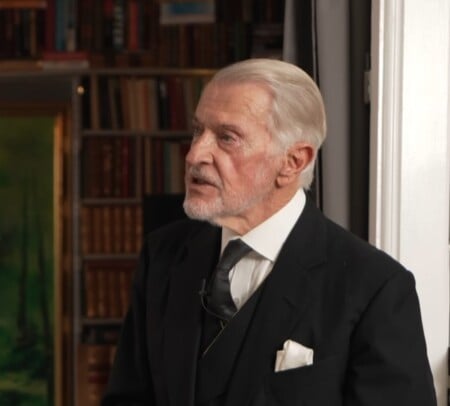
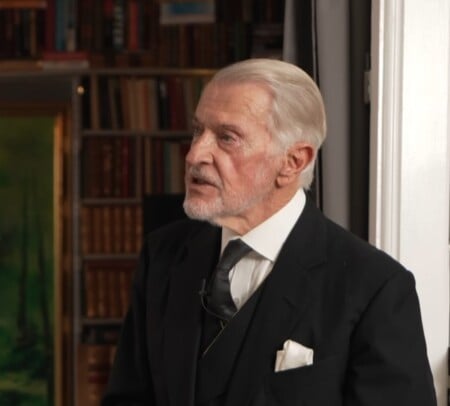
He has been a diplomat, a CEO, a close-up magician, and even survived 52 days on a desert island. Join us as we explore the wardrobe of Henrik Hjerl, a Danish sartorialist whose life is as fascinating and unique as his bespoke suits.
A Life Less Ordinary: Meet Henrik Hjerl
From Diplomat to Desert Island Survivor
Raphael interviews Henrik Hjerl, also known as “Butler” on Style Forum. Henrik’s resume reads like fiction: he was trained as a British butler under Ivor Spencer, served as a diplomat in New York, performed in a circus, and participated in the TV series “Survivor” twice, once lasting 52 days on a desert island. He is a true polymath who brings a wealth of life experience to his sartorial choices.
Read his feature in The Rake
Building a “Complete” Wardrobe
Henrik guides Raphael through his unique collection, explaining his philosophy of building a versatile, “complete” wardrobe with relatively few items. You’ll see his preference for the comfortable “drape cut” from Savile Row tailor Steven Hitchcock, his signature military-inspired “gauntlet cuffs”, and his stunning 1901 Spanish Cape.
“The real knowledge is to first know the rules and then perhaps how to break or adapt them to fit the circumstances and not least, your own persona.”
Henrik Hjerl, Sartorial Connoisseur
Highlights from this Video
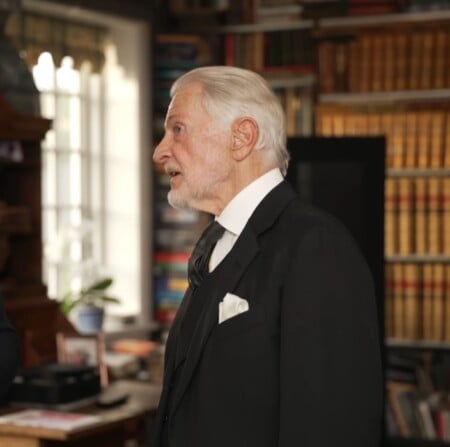
“There’s only like one place in the world who do it… that’s Barkers.”
Why does Henrik wear detachable collars? He reveals the secret behind their unique shine.
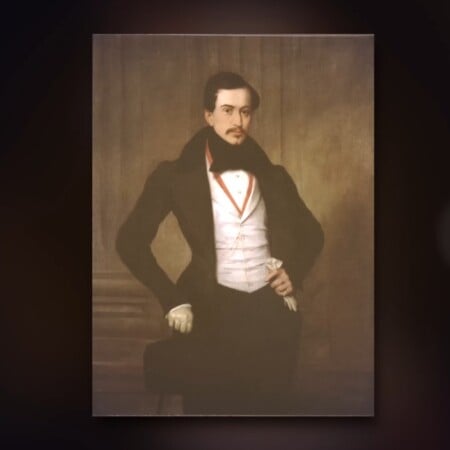
“In the old days… people wore two waistcoats on top of each other.”
Originally designed for warmth before central heating, this detail adds a classic, layered look to his tailoring.
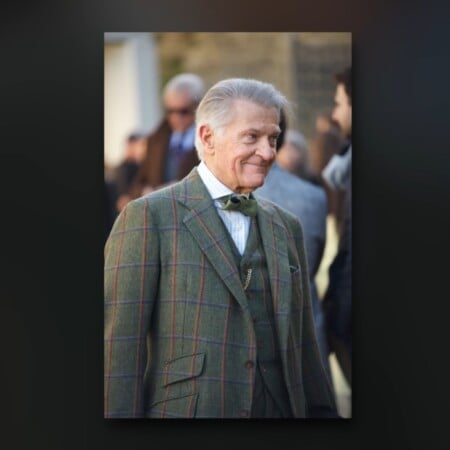
“That has been called by quite a few knowledgeable people… the best suit in the world.”
Henrik shows off his Lovett Mill windowpane three-piece, featuring bold colors (violet, orange, red) and Steven Hitchcock’s incredible pattern matching.
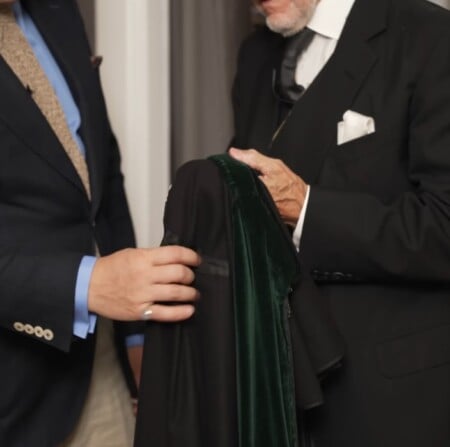
“It’s 6 meters of material… And another thing, you don’t have to wear gloves.”
Henrik demonstrates how to don his 1901 Spanish “Capa,” explaining the specific technique for draping it to keep your hands warm without gloves.
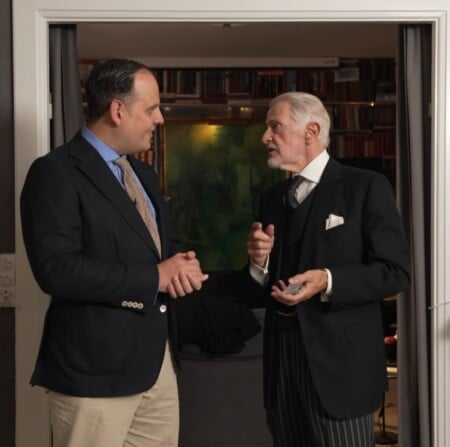
“It’s the second oldest art in the world after singing and dancing.”
Watch as he explains the universal appeal of magic and performs an impromptu trick with a newspaper clipping.
What We Were Wearing
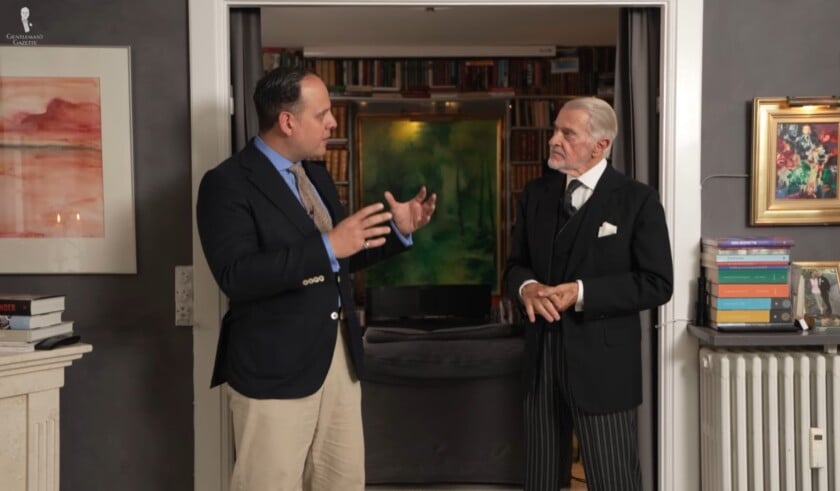
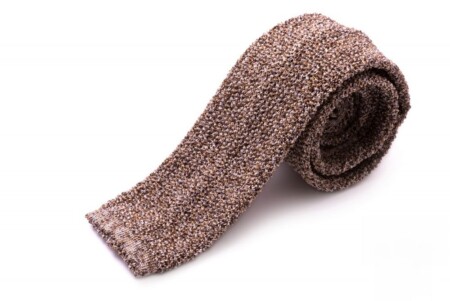
For this interview with the impeccably dressed Henrik Hjerl, Raphael chose a classic ensemble that balanced texture and contrast. He wore a dark navy textured sport coat paired with a crisp light blue dress shirt and cream trousers. To add visual interest, he selected a beige mélange knit tie, which harmonized with the lighter tones of the outfit.
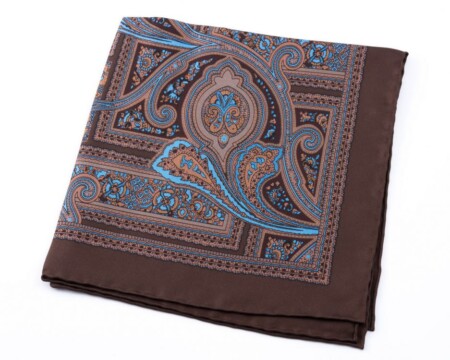
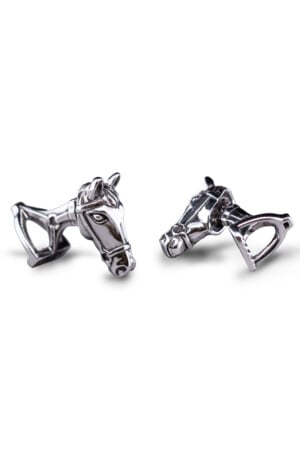
He accessorized the look with a Fort Belvedere silk pocket square in brown with blue paisley, the warm tones of which perfectly complemented the tie. Finally, adding a subtle touch of detail to the cuffs, he wore a pair of horse & stirrup silver cufflinks.
“You managed to create something of a complete wardrobe with a relatively few items, which I find quite impressive.”
Sven Raphael Schneider, CEO & Founder, Gentleman’s Gazette
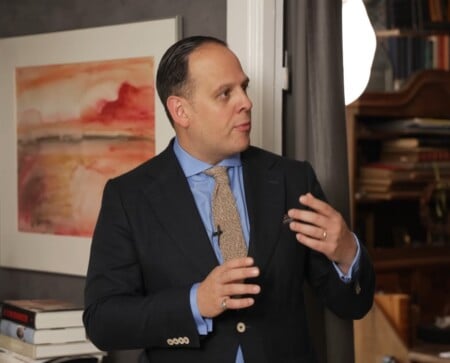
Ask the Expert
What is the “Drape Cut” and why does Henrik prefer it?
The “Drape Cut” is a style of tailoring associated with Savile Row (specifically the Anderson & Sheppard lineage) that features extra fabric in the chest and back. Henrik prefers it because it allows for greater mobility—you can lift your arms without the whole jacket lifting up—and because it is extremely comfortable, describing it as “like having a jumper on”.
Why wear detachable stiff collars?
Henrik favors them for their unique aesthetic, noting that “no fixed collar will look as smart, elegant and sophisticated.” He explains that even the best shirtmakers cannot replicate the look of a detachable collar that has been heavily starched and polished on 100-year-old machinery (specifically by Barker’s in England), which gives them a distinct sheen.
What is a “Gauntlet Cuff”?
A gauntlet cuff is a signature detail found on many of Henrik’s jackets. Unlike a “turnback cuff” (which is the sleeve fabric folded back), a gauntlet cuff is a separate piece of fabric applied to the sleeve. It stems from old military uniforms, honoring Henrik’s family tradition.
What is a “Slip Waistcoat”?
A slip waistcoat features a strip of white piping or fabric along the inner edge. Henrik explains this detail mimics the historical practice of gentlemen wearing two waistcoats on top of each other for warmth before central heating existed; the white strip represents the “under” waistcoat peeking through.
Why should you stick to one tailor?
Henrik advises against “trying a lot of different tailors”. He believes it is better to do your research, find a house style you love, and stick with it. This allows you to build a personal relationship with the tailor and refine the fit over multiple commissions, rather than having a wardrobe full of “not maximum suits” from various makers.
Watch Our Previous Video with Henrik
“Even the best shirt makers in the world… will admit that you can never get that very special look of a detached heavily starched collar without having them detached.”
Henrik Hjerl, Sartorial Connoisseur
Read his profile in The Sartorial Journal
What to Watch Next
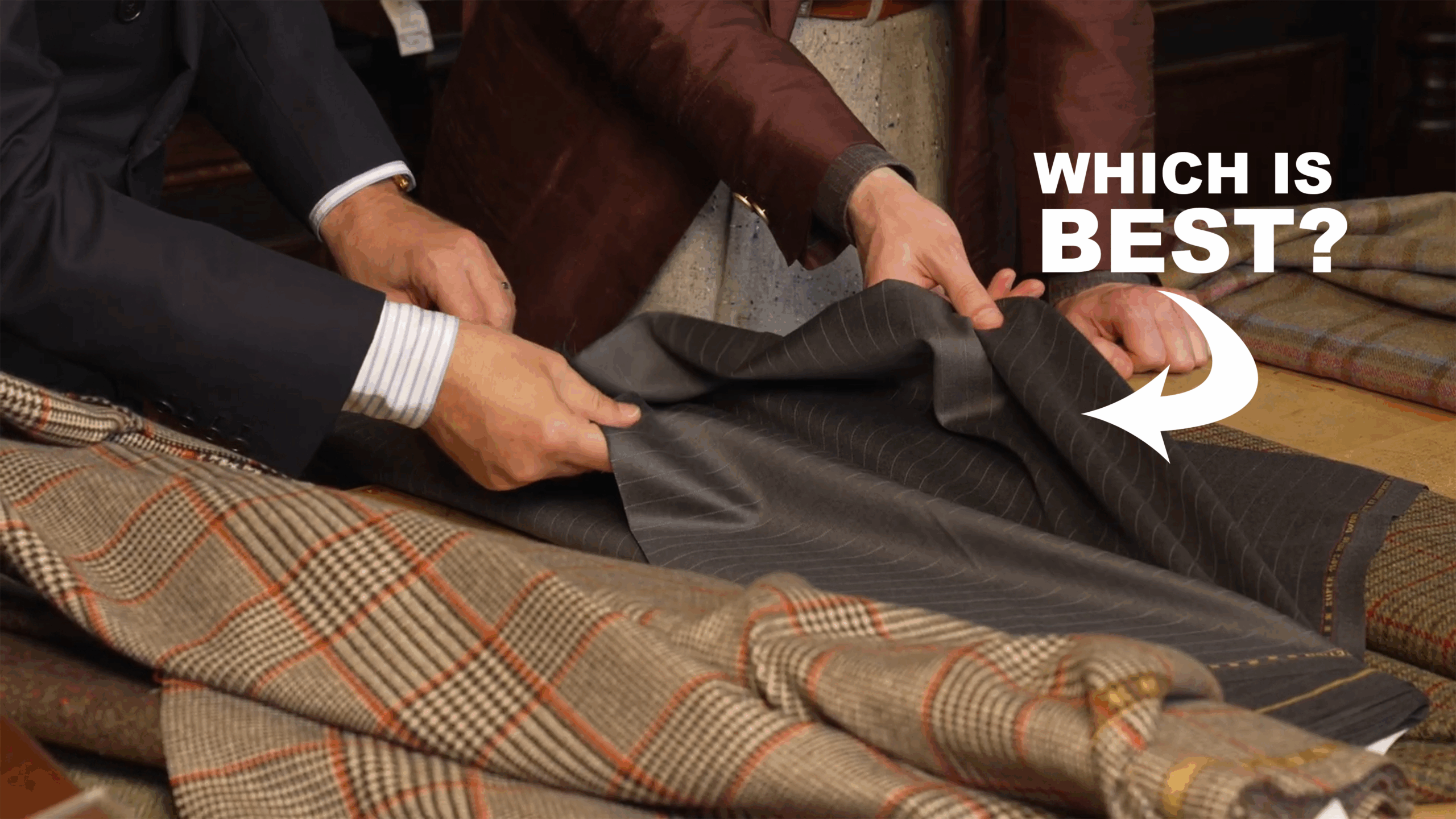
How to Think Like a Tailor
Join us at Wilhelm Jungmann & Neffe for a masterclass with British tailor Simon Skottowe. Learn about “fabric stability,” why linen isn’t lightweight, and how to avoid the “Franken-style” suit.
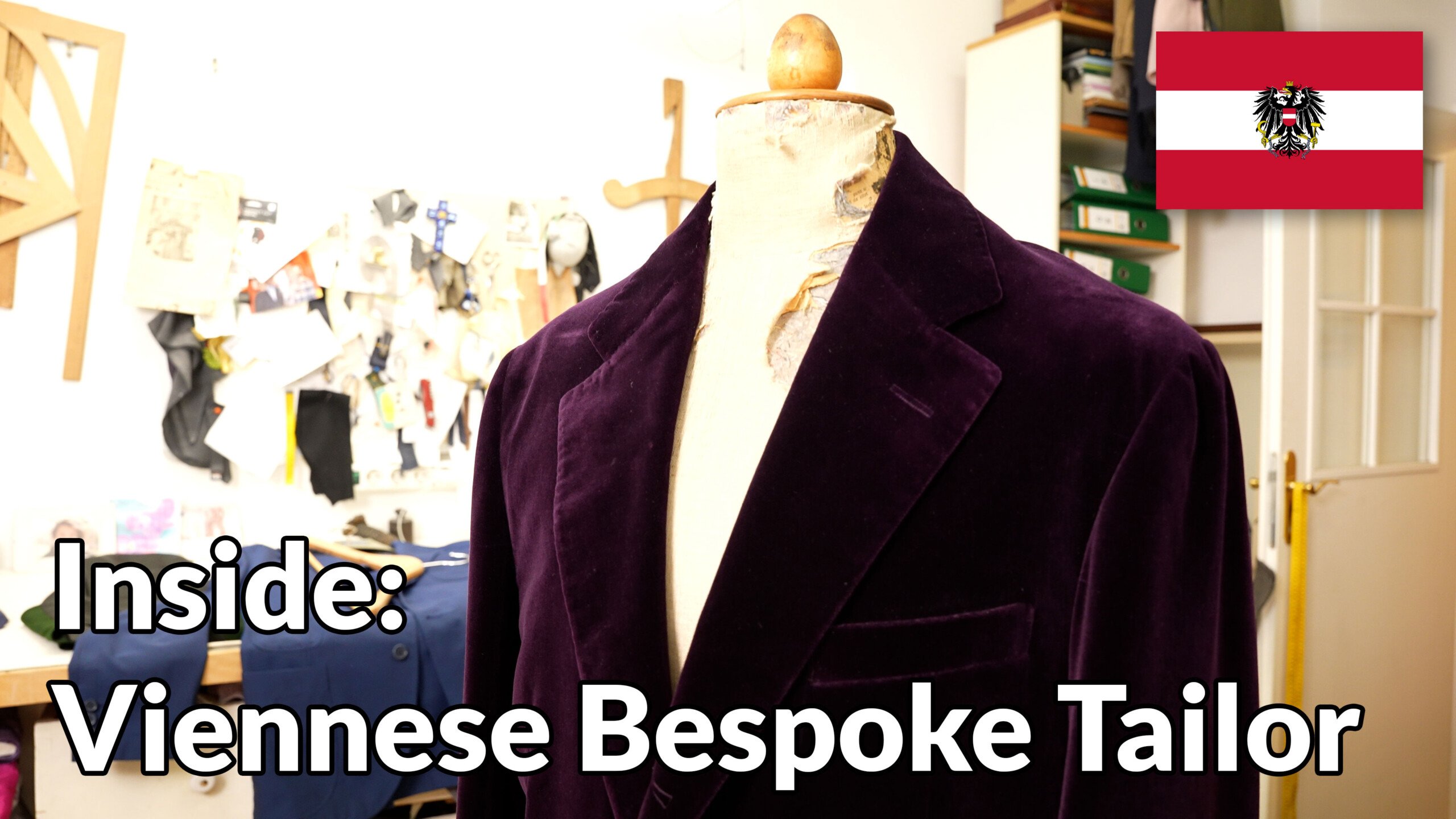
The Tailoring Philosophy of Michael Possanner
Step inside the Viennese salon of a master tailor who believes a bespoke suit should feel as comfortable as a pajama, and learn his secrets to soft tailoring.
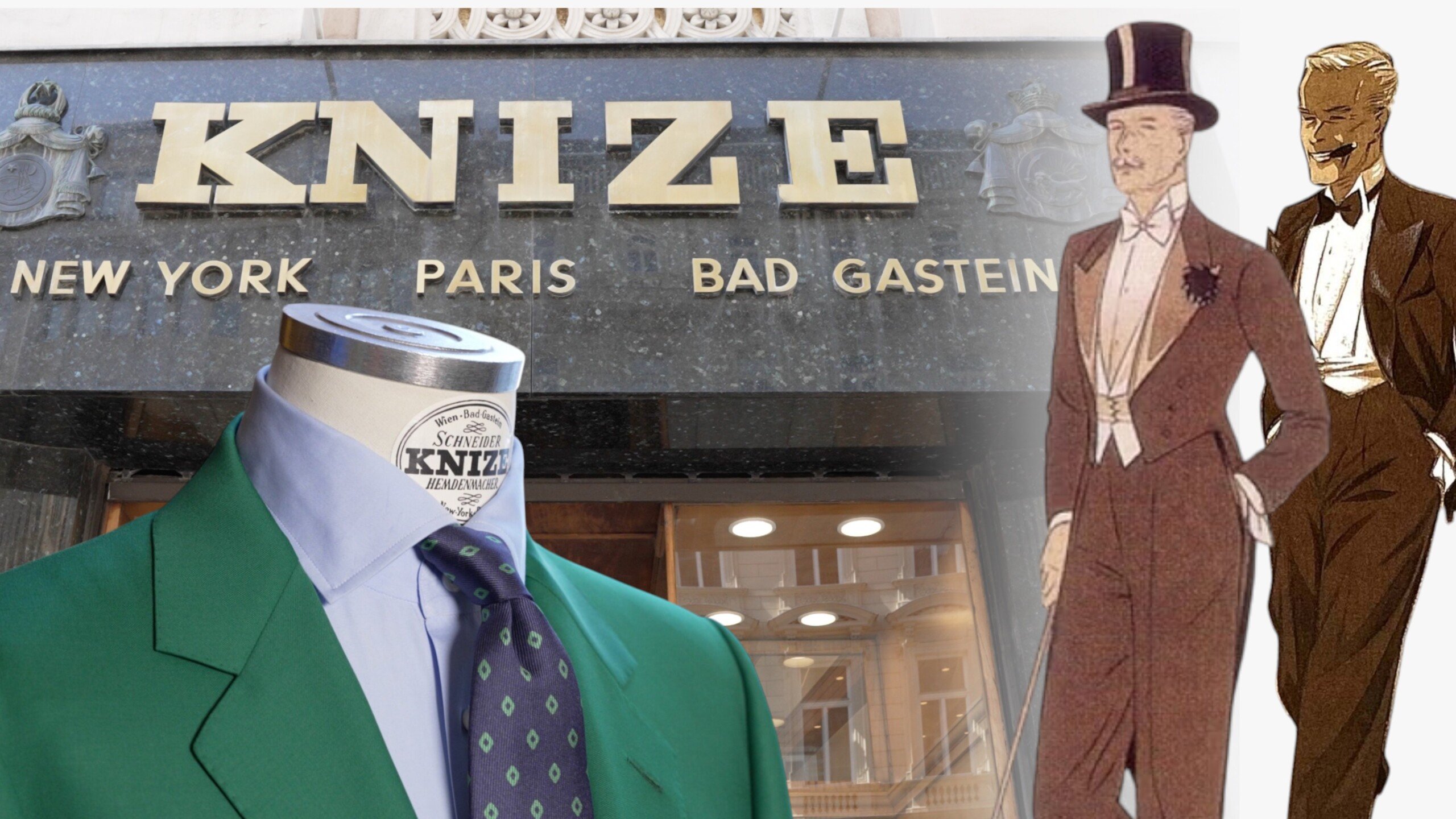
Knize: A Tour of the World’s Most Beautiful Menswear Store
Explore the iconic Knize shop in Vienna, famous for its Adolf Loos architecture, its legendary “Knize Ten” fragrance, and its status as a temple of classic menswear.

Leave a Reply