One evening, pre-cocktails, I was flipping through the September 1962 edition of Esquire magazine when I came across something I had to share with you.
The article is titled “The Basic College Wardrobe,” and it exists as a foolproof packing list for the young collegiate gent heading off for his studies in the early sixties.
- Why a Sixty-Year-Old Packing List Still Holds Up
- Suits: Three Is the Right Number
- Jackets: One Blazer, One Check
- Trousers, Chinos, and Shorts
- Outerwear: Where the List Shows Its Age
- Shirts: Adjust the Quantities to Suit You
- Neckwear: The Most Versatile Category on the List
- Knitwear: Two Pieces, Maximum Range
- Footwear: Five Pairs That Cover Everything
- Black Tie: One Dinner Suit, Done Properly
- Hats: Three, and One Substitution
- Accessories: Belts, Braces, Socks, and Jewelry
- Loungewear: Lounging Should Be Stylish, Too
- Building Your Own Version
- Capsule Wardrobe FAQ
- What to Watch Next
What’s so inspiring and so useful about this list is that by tailoring the items to fit your personal tastes, you can build an extremely solid collection of clothes. Let me show you how.
Why a Sixty-Year-Old Packing List Still Holds Up
A capsule wardrobe works on one principle: every piece has to earn its place by combining with the others. That’s exactly what this list does, and it does it without ever using the term.
The approach below isn’t about buying these items literally. It’s about treating the list as a template.
Where the original calls for four pairs of chinos, I’ve taken one. Where it calls for a stadium coat, I’ve gone somewhere else entirely. The structure survives the substitutions, which is the whole point.
Suits: Three Is the Right Number
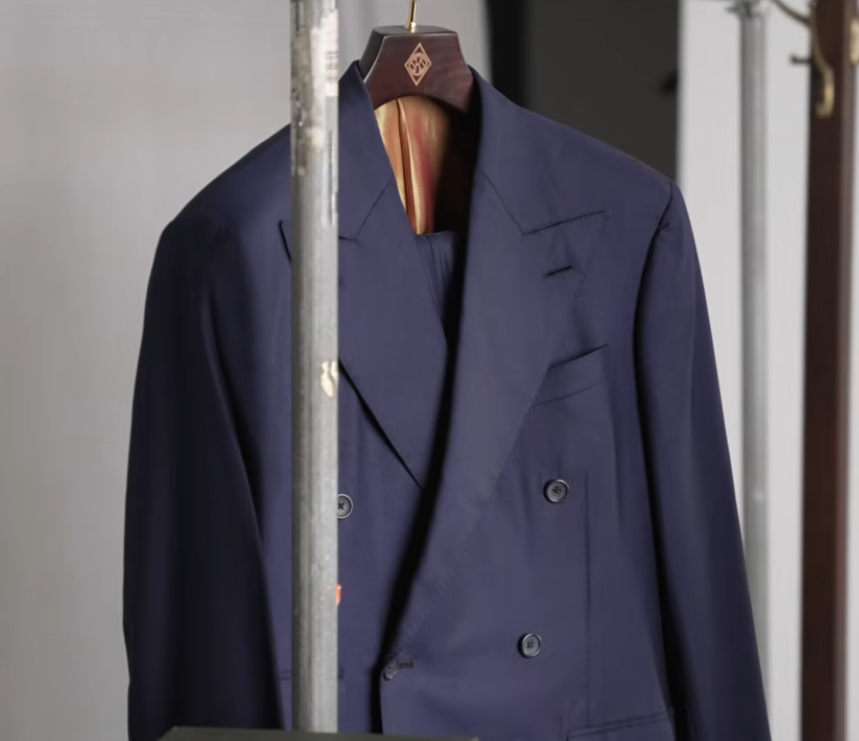
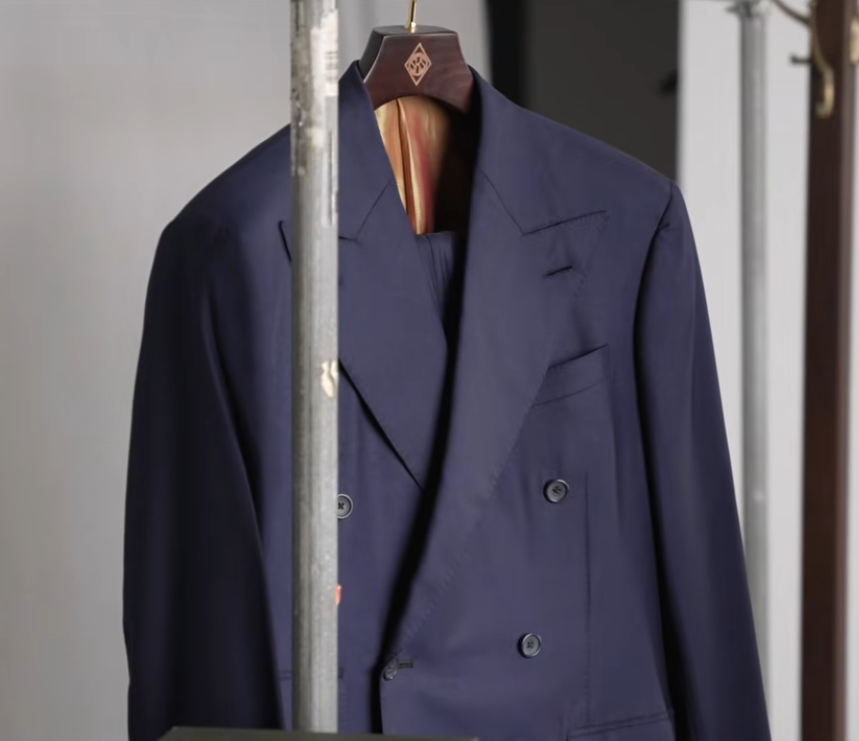
Esquire’s first call is a dark blue suit with a matching waistcoat.
I’m going to alter this to a double-breasted model, as it’s a little more formal and I can happily wear the jacket as a separate with the other items on the list.
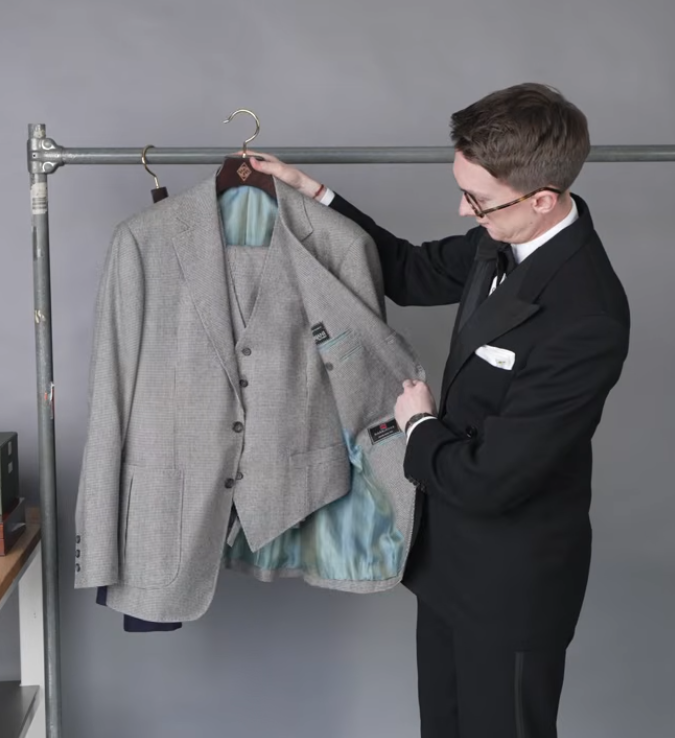
Next, a medium gray flannel suit.
Here’s where I’ll add that waistcoat. As mine is a mid-gray flannel with a puppytooth pattern, each of these individual pieces will work nicely as separates. The discreet pattern and the patch pockets on the jacket make it easier to wear individually, too.
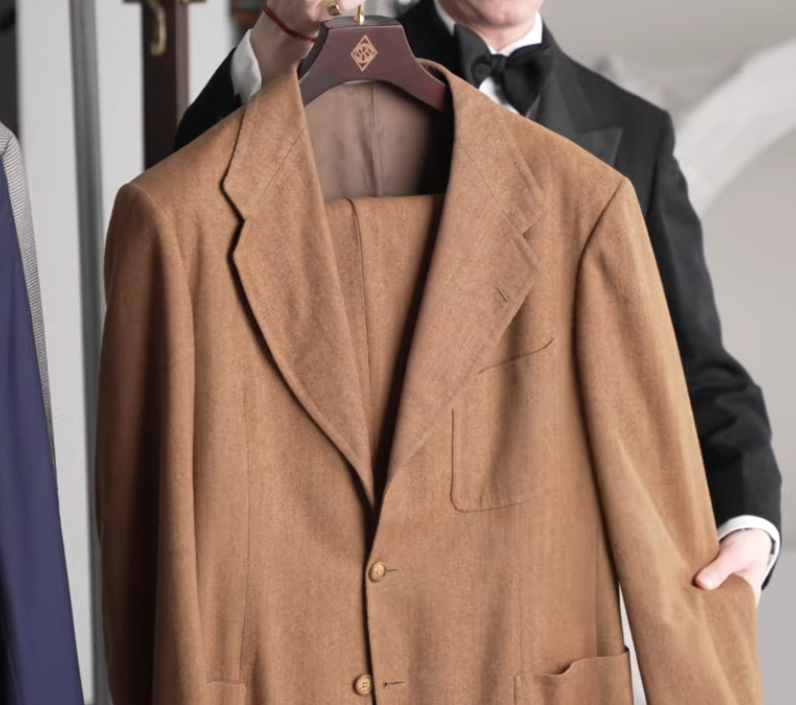
The third calls for a herringbone, diagonal, or neat pattern in tweed or Shetland.
The one I’ve chosen is a two-piece in a lovely ginger-toned herringbone, which works in tandem with everything else thus far.
Jackets: One Blazer, One Check
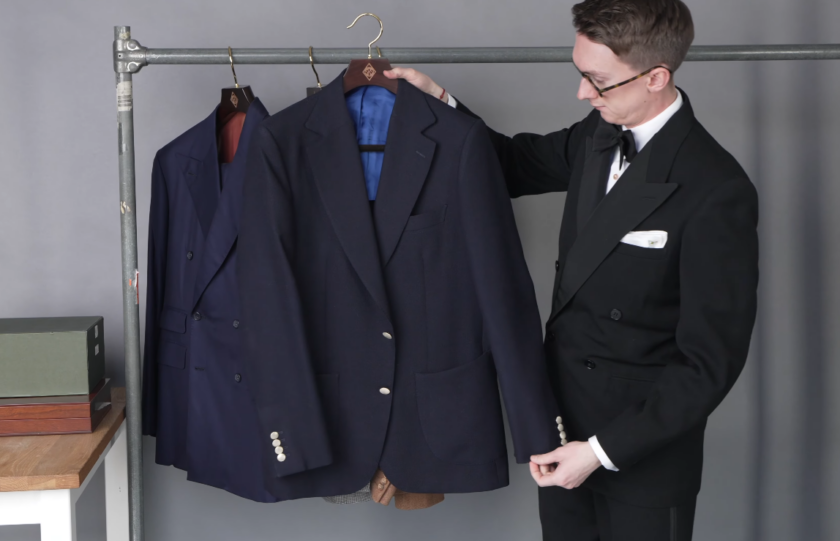
One navy blazer with brass buttons. As this is designed to stand on its own merit, I had to go for the king of blazer fabrics: hopsack. It’s an elegant open weave with a gorgeous texture that’s incredibly classic. And as the navy suit jacket is fully lined, I’m maximizing my options by having this blazer be half-lined, so I have a greater range of options across climates.
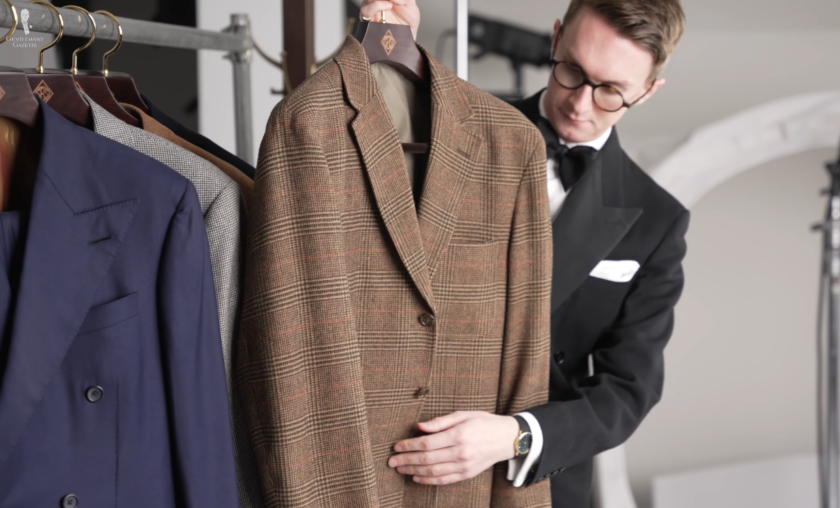
A checked, plaid, or striped Shetland or tweed jacket comes next. I’m going with a classic Glen plaid check with patch pockets. Not only is it a different pattern from the brown suit, it’s also a different shade, which increases my outfit options across the entire wardrobe.
Trousers, Chinos, and Shorts
One charcoal gray flannel and one medium gray flannel. I’ll add the plain charcoal pair, as they’re dark enough to work across the board, but I’ll skip the mid-gray and use the trousers from the puppytooth suit when needed.
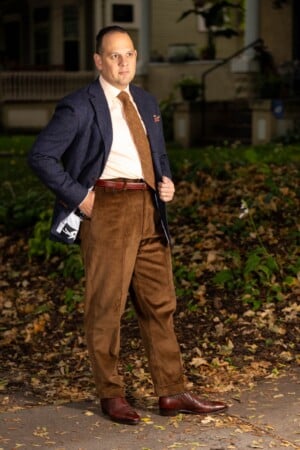
A pair of dark olive trousers, which I’ve chosen in corduroy for added texture and depth of color.
Four pairs of tan chinos. Now, I’m not sure how often they went through their chinos in the 1960s, but one classic pair will suffice for me.
A pair of tan corduroys. I’m going to substitute a darker tan, more of a chestnut brown, so it’s noticeably different from the chinos.
Shorts will depend on your lifestyle, as the list calls for a pair of gym shorts. I’m not the most active person, so instead I’ll go for a classic style I can appreciate: the Madras check.

Outerwear: Where the List Shows Its Age
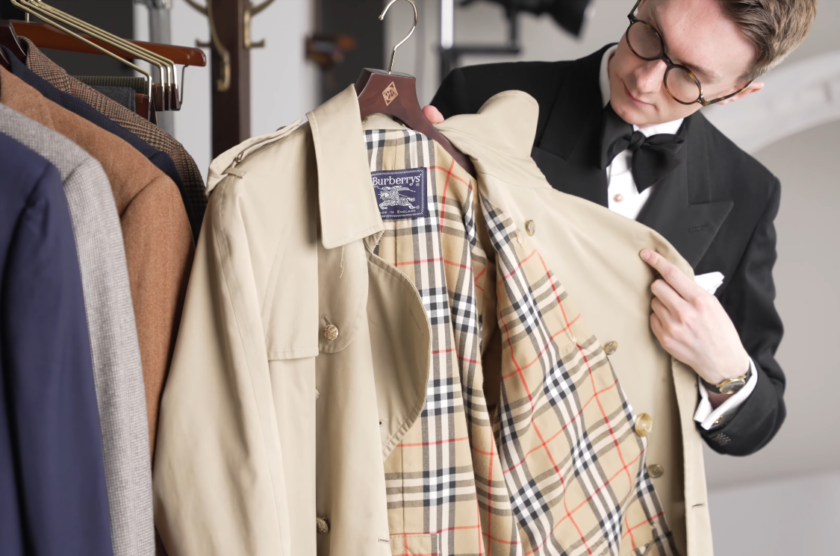
A natural-color poplin raincoat. With perhaps no surprises, for this choice it simply has to be the classic Burberry trench. Of course, a different style might be more to your taste, but this particular raincoat has endured for a reason.
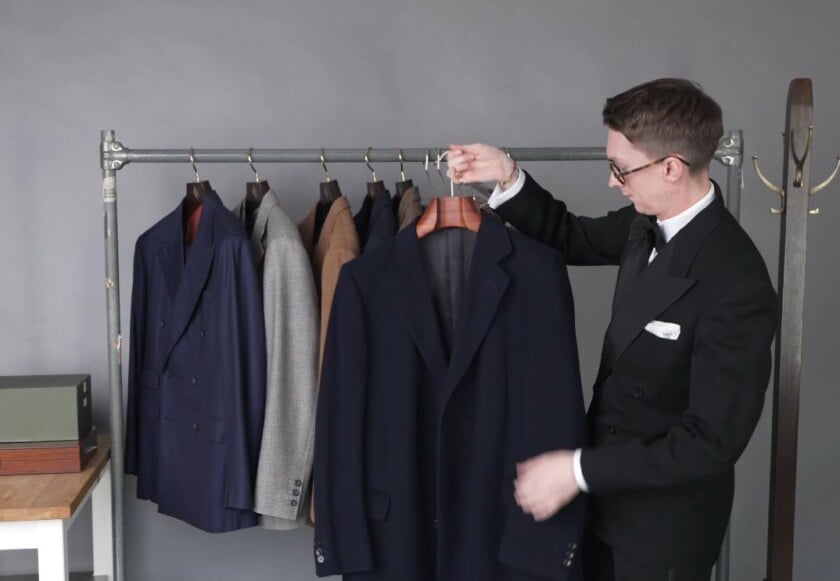
A dark, dressy wool topcoat. I’ve opted for a classic navy overcoat in a single-breasted cut with a generous length, perfect for all formal occasions where an overcoat is required.
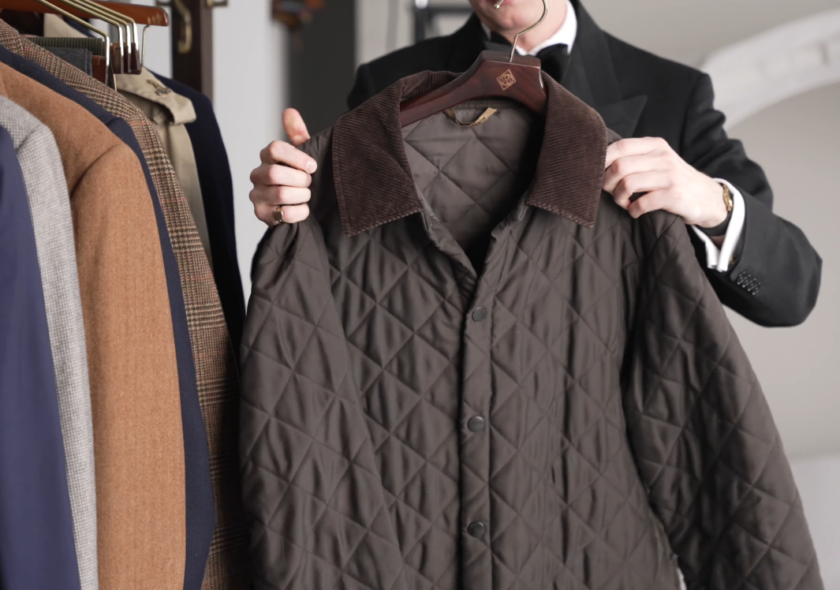
A stadium coat, meaning a shearling, duffel, or corduroy coat with pile fabric or quilted lining. This is where the list shows its age a little. Wanting to avoid any of the more dated shearling coat trends, I’ve instead picked up on the quilted lining aspect and gone for an olive-brown quilted coat from Barbour. Raphael swears by these for traveling in cooler weather, as they’re nice and light while still being very functional.
Shirts: Adjust the Quantities to Suit You
The list is generous here, and this is the category where I’d most encourage you to scale to your own needs.
| What Esquire Recommended (1962) | What I’d Choose Today |
|---|---|
| Six white and three blue Oxford cloth button-downs | A little excessive for that many shirts in the same style, so feel free to adjust those numbers. Undeniably, though, it’s a classic option. |
| One yellow or olive button-down | A pale yellow in linen. I feel this is a great combination of color and fabric for warmer climates. |
| Three striped shirts | A green awning stripe, a classic blue and white stripe with a cutaway collar, and a bolder shirt with a blue base and a white and brown multistripe. |
| Two tab collars in white, or white with stripes, in broadcloth | Taking some liberty: a gray and white stripe with contrasting cuffs and collar, keeping the tab fastening. It’s a nice style, and it’s useful to have something a little different. |
| One or more solid or plaid flannel shirts | Skipped. I find more use from a long-sleeve piqué knit polo, but you can happily adjust the list to fit your needs. |
| Two white pleated bib evening shirts | Unless you’re wearing black tie frequently, one will suffice. |
Neckwear: The Most Versatile Category on the List
| What Esquire Recommended (1962) | What I’d Choose Today |
|---|---|
| Four silk repp striped ties | Three, adding in one mottled knit tie. The beauty of these is the variety of colors present in each one. They’re all going to work across everything in this wardrobe, making them a fantastic investment. |
| Three silk foulards with neat patterns | Reduced to two: one classic paisley and one in a beautiful vintage-style design. |
| Three wool challis ties with patterns or paisleys | Three with different background colors, leaning into the muted texture of the ties. |
| One black knit tie | Substituted with a black grenadine silk. |
| One wine, olive, or navy knit | A knit tie in a unique navy zigzag pattern. |
Quite the evergreen collection of ties.
Knitwear: Two Pieces, Maximum Range
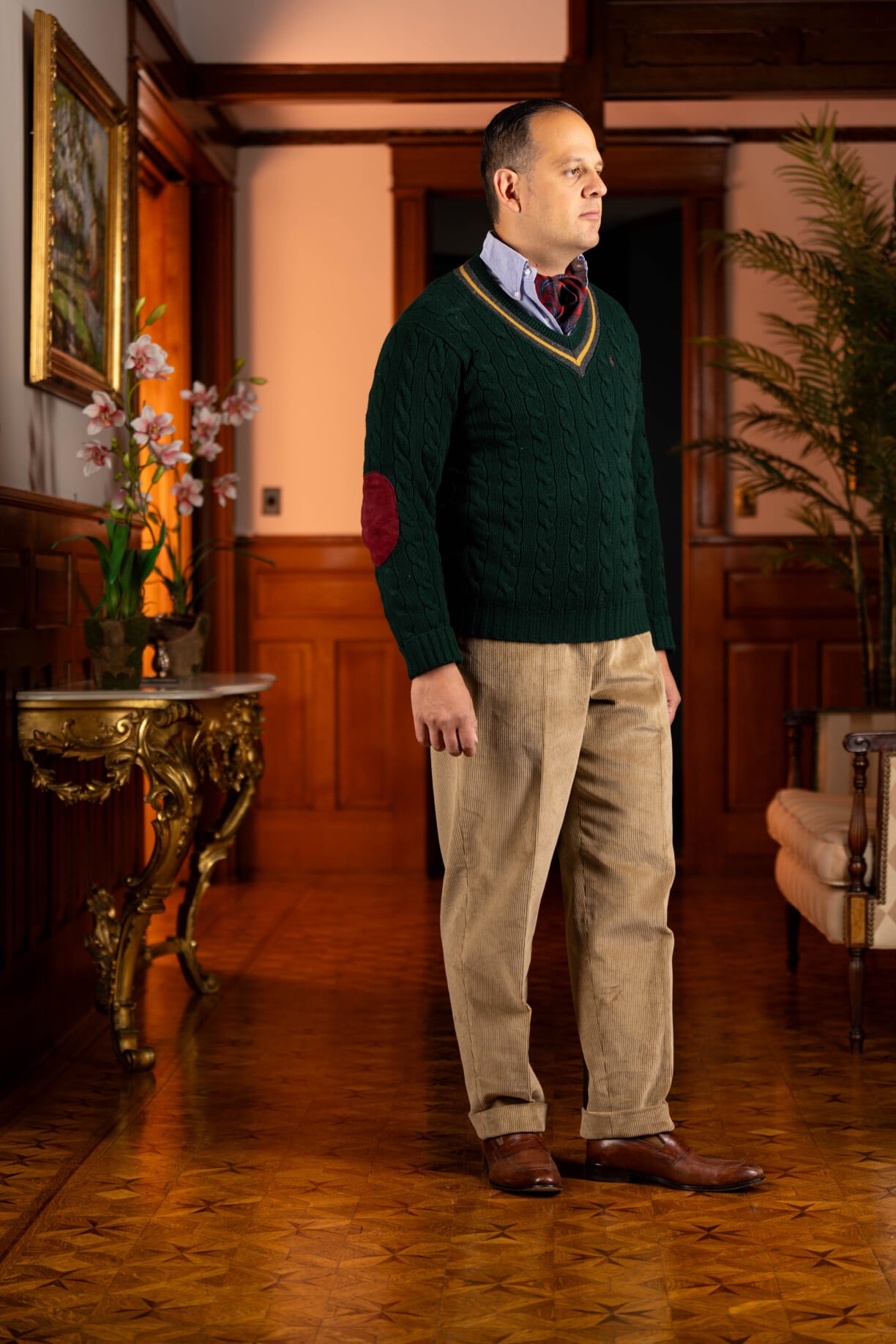
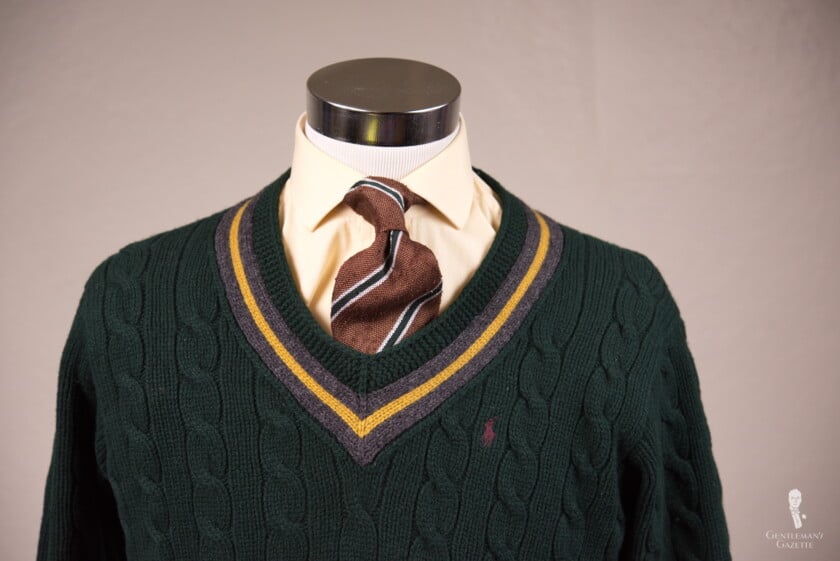
One crew neck Shetland or brushed wool sweater. I’m going to go for a V-neck for added versatility. In this case, it’s hard to resist a cricket or tennis sweater in a lovely bottle green color, a surprisingly versatile option.
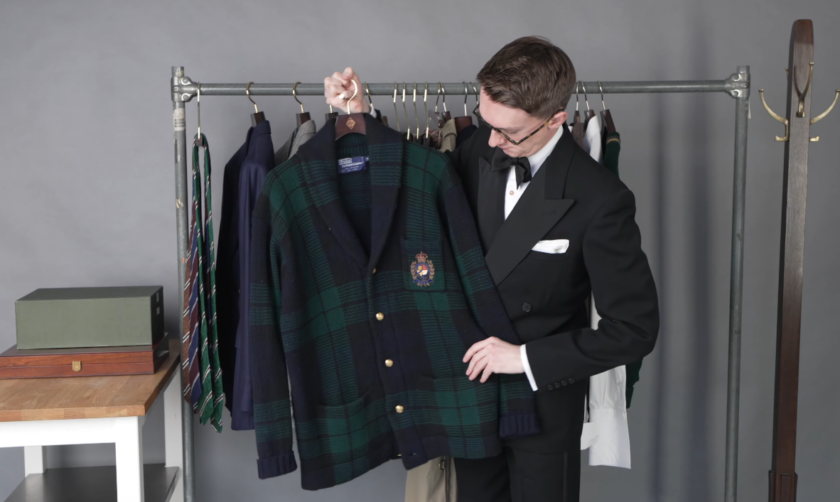
One cardigan in any color. I’m going to take liberty here and add a shawl cardigan in a Black Watch tartan. With the contrasting brass buttons, this becomes an incredible choice as a blazer alternative, perfect for days when you want to feel both dressed up and relaxed at the same time.
How Do You Style a Cardigan?
Footwear: Five Pairs That Cover Everything
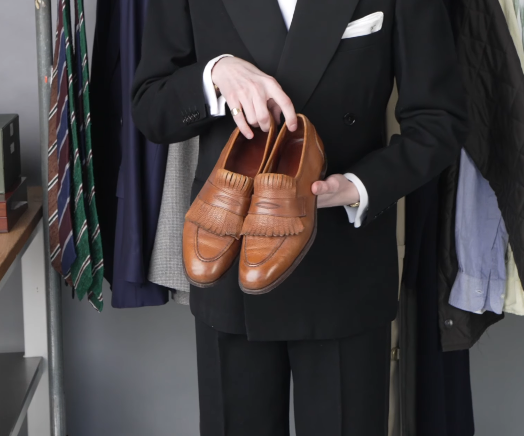
- Black or brown moccasin slip-ons. As slip-on shoes are typically more casual, I’ll add a pair of light brown loafers with a fun kiltie element to the design. Of course, a pair of classic tassel loafers would work nicely here, too.
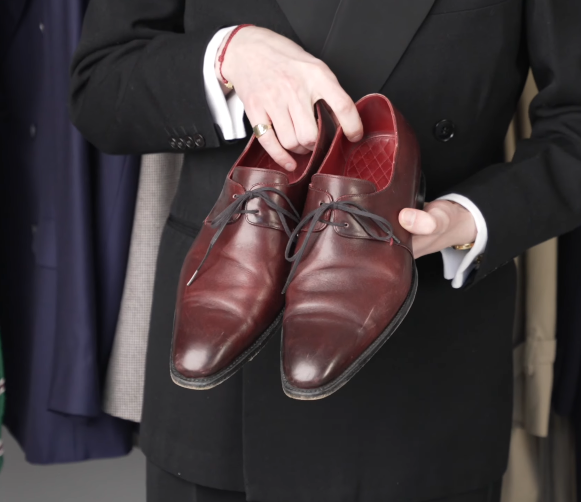
- A pair of plain-toe cordovan shoes. This is a particularly preppy choice, so I’m going to lean into that deep burgundy associated with shell cordovan by choosing a pair of plain-toe derbies. As far as classic, versatile shoes go, it’s very hard to beat this pair.
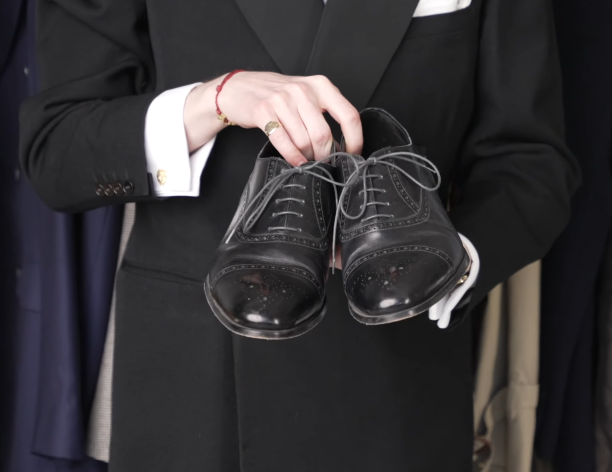
- A pair of black wingtip laced shoes. Leaning on my British heritage, I’ll go for a pair of black quarter brogues. Think of them as the cap-toe oxford with a little added intrigue.
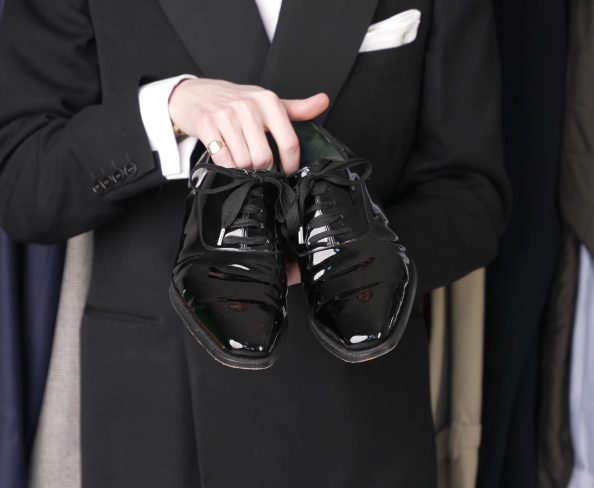
- For evening wear, either black patent or polished calf. The latter would work very nicely if you want to maximize the bang for your buck, but I personally can’t resist the call for a pair of evening-specific shoes, so we’ll add a pair of black patent whole cuts.
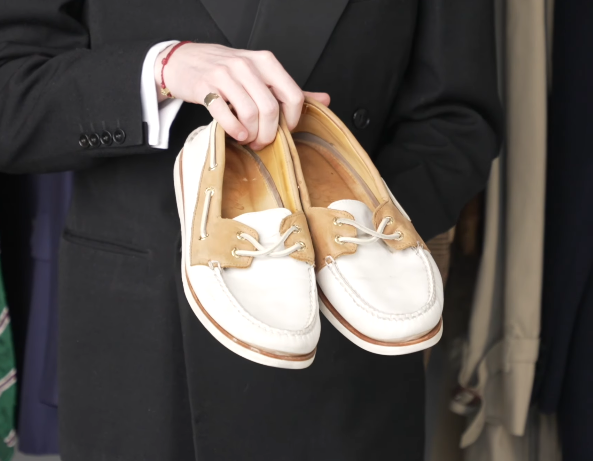
- Rubber-soled gym or tennis shoes. On the opposite end of the formality scale, I’ll substitute some classic boat shoes in lighter tones. Personally, these are just a touch dressier than canvas shoes, meaning a greater ability to wear them across the board.
Black Tie: One Dinner Suit, Done Properly
We’ve seen a few elements of black tie so far in the wardrobe, so let’s add the rest here.
A black year-round dinner suit with notch or shawl collar. The notch lapel is certainly an interesting choice for this article, so I’ve chosen a single-breasted peak lapel instead. Regarding the year-round nature, barathea wool in whatever weight is most comfortable for you is a timeless choice.
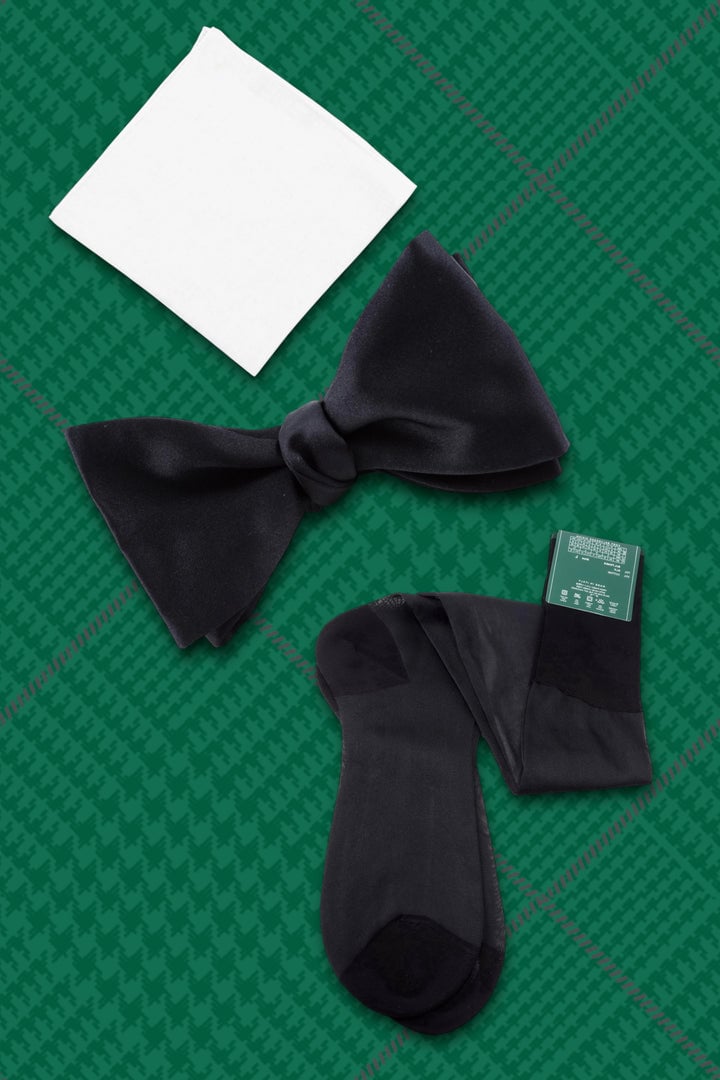
This option allows for a satin silk pleated cummerbund to be seen underneath and a matching bow tie on top. I’ve leaned into the 1960s feel by choosing a style of bow popular at the time: the batwing.
Minimalist Black Tie Bundle
The core essentials for a streamlined, contemporary look.
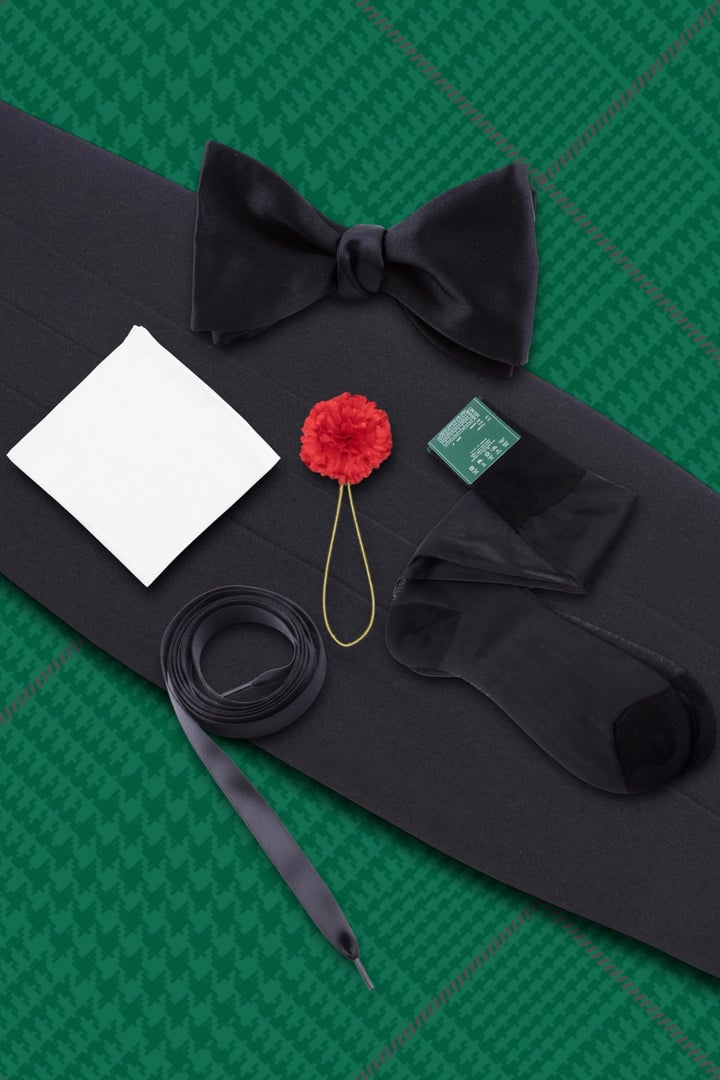
Classic Black Tie Bundle
The complete, all-in-one set for a timeless formal look.
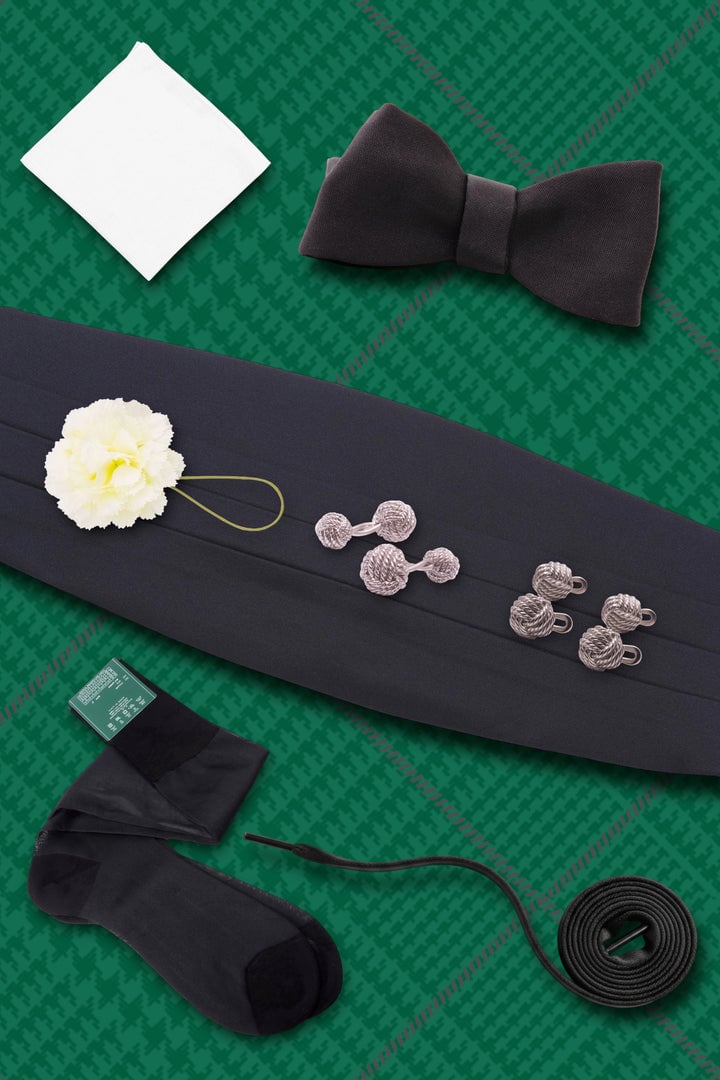
Luxury Black Tie Bundle
The ultimate set, including all silk accessories and fine jewelry.
Hats: Three, and One Substitution
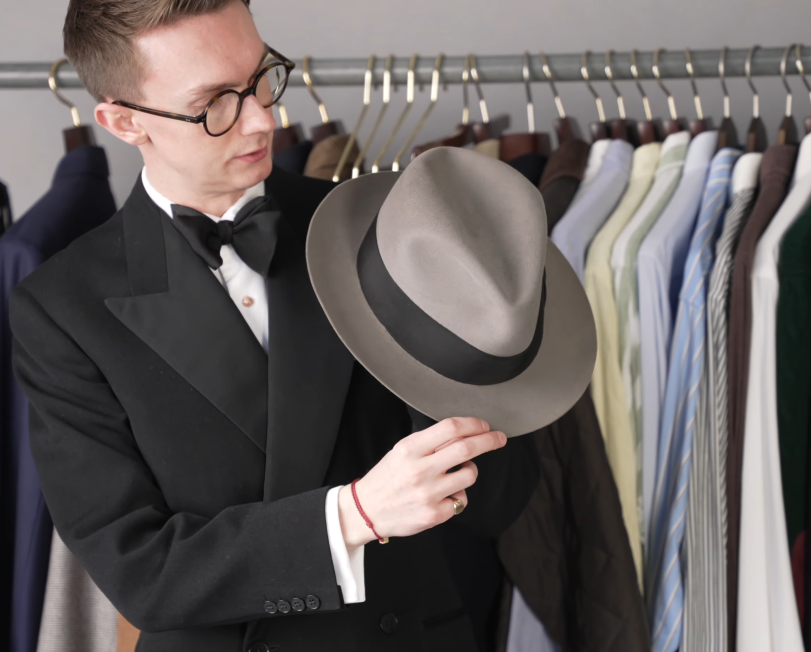
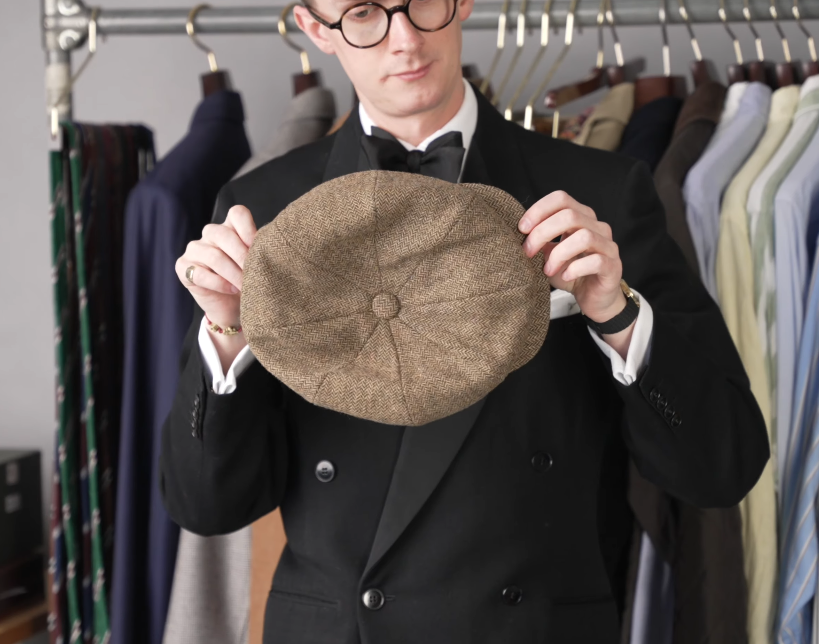
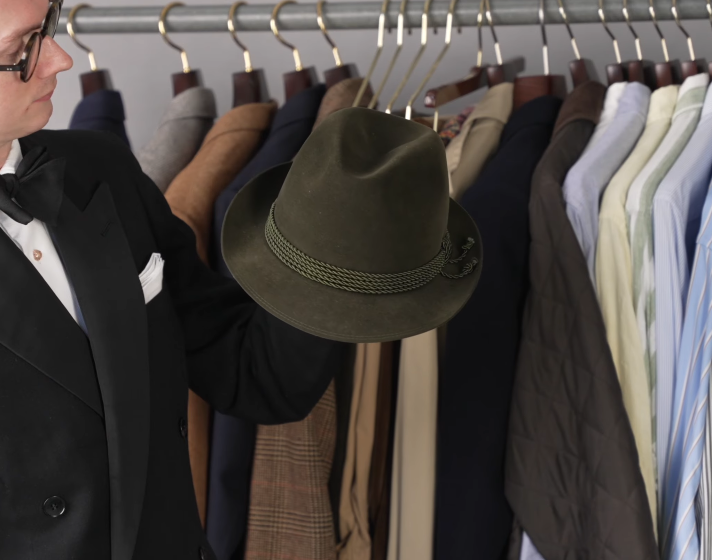
While I’m not usually much of a hat wearer, the list does call for three hats. Luckily, all these options are simple, stylish, and readily available.
One gray felt center-crease snap brim. One tweed or check wool cap. And one brushed felt Tyrolean. That last one may be a little dated, but in reality, mine is a short-brimmed Trilby in olive green. Surprisingly versatile.
Accessories: Belts, Braces, Socks, and Jewelry
| What Esquire Recommended (1962) | What I’d Choose Today |
|---|---|
| Black leather belt | A black leather belt that’s reversible with dark brown, for added wear. |
| Brown leather belt | Reversible too, this time in a lighter vegetable-tan brown with white as its reverse. Don’t knock it until you try it. |
| Fabric belt | Canvas webbing with mid-brown leather ends, for more casual outfits. |
| Plain black braces | A pair with a more versatile geometric pattern. |
| Black ribbed socks | Made a little more interesting with a contrasting white shadow stripe. |
| Navy socks | A plain knit with clocks on the sides. |
| Olive or brown socks | Olive and yellow in a midweight knit, for cooler temperatures. |
| White and colored athletic socks | Skipped, in favor of a more gentlemanly khaki and red two-tone knit. |
| Black silk socks | Kept as is, for evening wear. |
| One tie clip | Kept as is. |
| One pair of cufflinks | An equestrian horse design, leaning into the collegiate nature of the original list. |
| One set of studs and matching cufflinks | The article seems averse to white pearl, so I’ll choose the classic monkey fist knot instead. That means I can wear these cufflinks separately from the dress set. |
| One pair of black leather or gray suede gloves | A pair of gray peccary gloves, quite possibly the best glove choice a man could make. |
| One pair of knit or leather sport gloves | A pair of driving gloves. This particular pair is unlined, giving the greatest possibility of wear across many climates. |
| One dozen white handkerchiefs | Unless you’re using them to blow your nose regularly, I’d suggest a high-quality classic white linen pocket square for every possible outfit combination on the list. |
| Two silk foulard pocket squares | One silk option and one wool-silk blend, to add a greater range of texture. |
Gloves is an area of the list that really shows the changing attitudes of the sixties toward boring glove colors.
Loungewear: Lounging Should Be Stylish, Too
Two pairs of pajamas, which I’ll reduce to one.
A plaid or solid flannel robe. I’ll be taking liberty by transforming this into an elegant velvet dressing gown with quilted elements and a sumptuous lining. After all, lounging should be stylish, too.
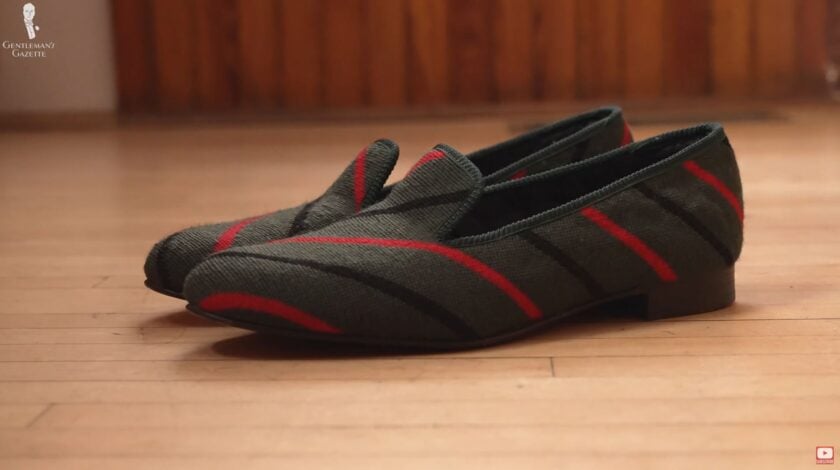
One pair of bedroom slippers. I’ll make this pair closer to house shoes, with a solid sole and heel. Maximum style and comfort.
Building Your Own Version
So there we have it: the ultimate gentleman’s wardrobe, by way of 1962.
How do you feel about this template? Is everything on the list something you already own, or have I given you some inspiration for your own collection? I’d love to hear your thoughts in the comments below.
Capsule Wardrobe FAQ
What is a capsule wardrobe?
It’s a deliberately small collection of clothing chosen so that every piece combines with the others, maximizing the number of outfits you can build from a limited number of garments. Our capsule wardrobe guide covers the concept in full.
How many suits does a man actually need?
The 1962 Esquire list settles on three, and it’s hard to argue with: one dark and formal, one mid-gray, and one patterned in a heavier cloth. Choosing suits with discreet patterns and patch pockets means the individual pieces also work as separates, which effectively multiplies the wardrobe.
How many shirts should be in a capsule wardrobe?
Esquire recommended fifteen or so, including nine Oxford cloth button-downs. That’s more than most men need today in a single style, and the sensible approach is to keep the categories, such as white, blue, striped, and one for evening, while scaling the quantities to your own laundry habits.
Is a 1962 wardrobe list still relevant?
Mostly, yes. The categories and the ratios hold up remarkably well. The places it dates are narrow ones: the stadium coat, the sheer quantity of identical Oxford shirts, and the assumption that a young man needs a dozen handkerchiefs.
What should I buy first when building a wardrobe?
Start with the pieces that combine with the most other items: a dark suit, a navy blazer, gray trousers, and white and blue shirts. Our business casual capsule wardrobe is a good starting point if your life doesn’t call for suits daily.
What to Watch Next
Capsule Wardrobe Guide for Men

7 Stylish Ways to Mix Casual & Professional Attire
The Ivy Style Primer

Leave a Reply