

For something so ordinary, tea can become remarkably refined when it is approached with a little care. The tools matter, the brewing matters, and the etiquette matters. But more than anything, tea offers a chance to slow down, show consideration for others, and turn a simple drink into a civilizing ritual.
Here is the essential guide to brewing and drinking tea with refinement.
- Tea Is More Than a Drink
- What You Need for Proper Tea Service
- Choose the Right Tea Set
- Why Loose-Leaf Tea Is Best
- How to Brew Tea Properly
- How to Prepare Milk, Sugar, and Lemon
- How to Pour Tea for Guests
- How to Add Milk and Sugar Correctly
- How to Hold a Cup and Saucer Properly
- How to Drink Tea at a Table, Seated Away from a Table, or Standing
- Tea Etiquette Mistakes to Avoid
- The Real Mark of a Gentleman at Tea
- Drinking Tea FAQs
- More Etiquette Guides for Men
Tea Is More Than a Drink
Like other gentlemanly pursuits, it has its own traditions, its own tools, and its own standards of conduct. None of them need to feel stiff or theatrical, but they do encourage a more thoughtful approach.
A proper cup of tea rewards patience, neatness, and attention to the people around you. It is as much about hospitality and courtesy as it is about flavor.
“Would you like an adventure now, or would like to have your tea first?”
J. M. Barrie, Peter Pan

What You Need for Proper Tea Service
A traditional tea service does not need to be extravagant, but it should include the essentials.
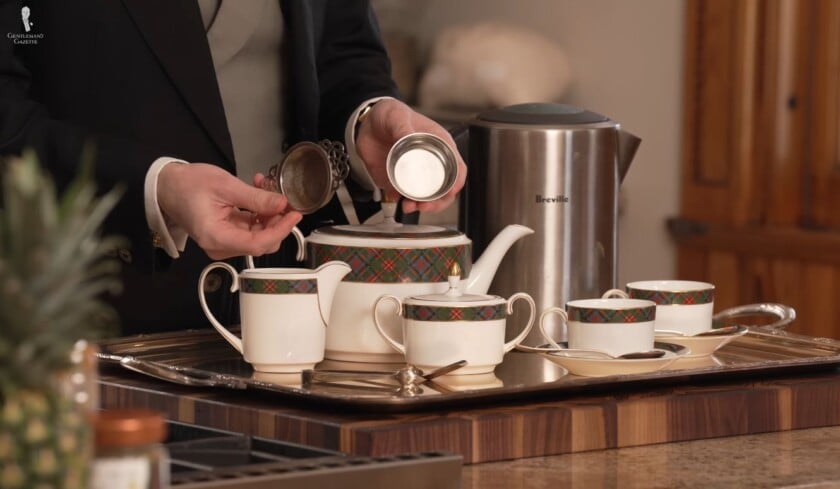
For a proper setup, you will need:
- a kettle
- a teapot
- a milk jug
- a sugar bowl
- a sugar spoon or sugar tongs
- a cup and saucer for each person
- a teaspoon for each person
- a tea strainer
- loose-leaf tea
- an optional tea tray
These pieces are worth having, but they do not need to be expensive. Vintage, thrift, and charity shops are often excellent places to find quality tea sets at very reasonable prices, especially older sets that were rarely used.
The Thrill of the Antique Hunt
Choose the Right Tea Set
At a minimum, teacups and saucers should be made of bone china. It is thinner, lighter, and generally more elegant than heavier ceramic wares. It also gives a finer drinking experience than bulkier cups.
For the teapot, there are two traditional routes:
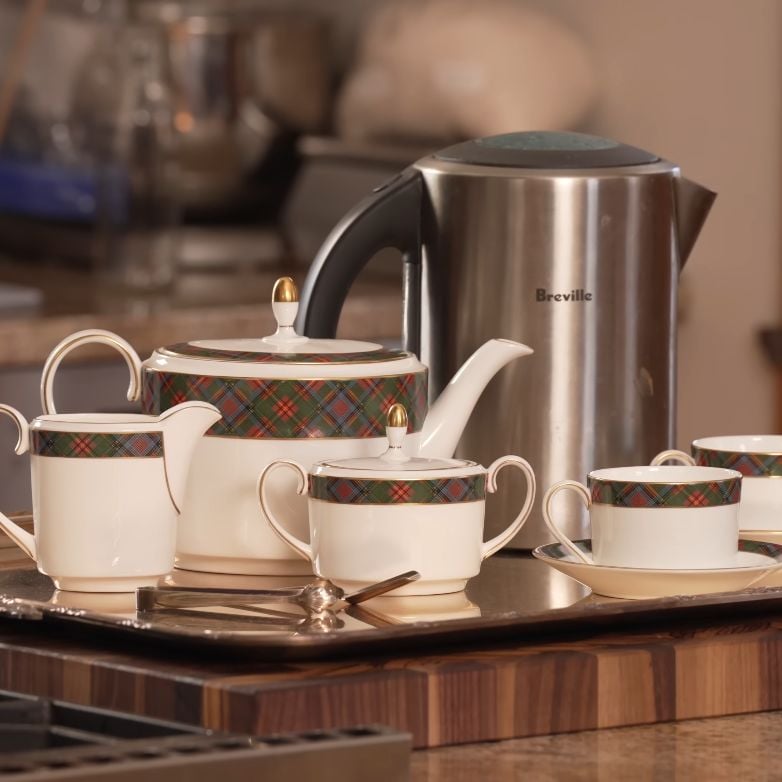
- a matching tea set, where the teapot, cups, saucers, milk jug, and sugar bowl all belong together
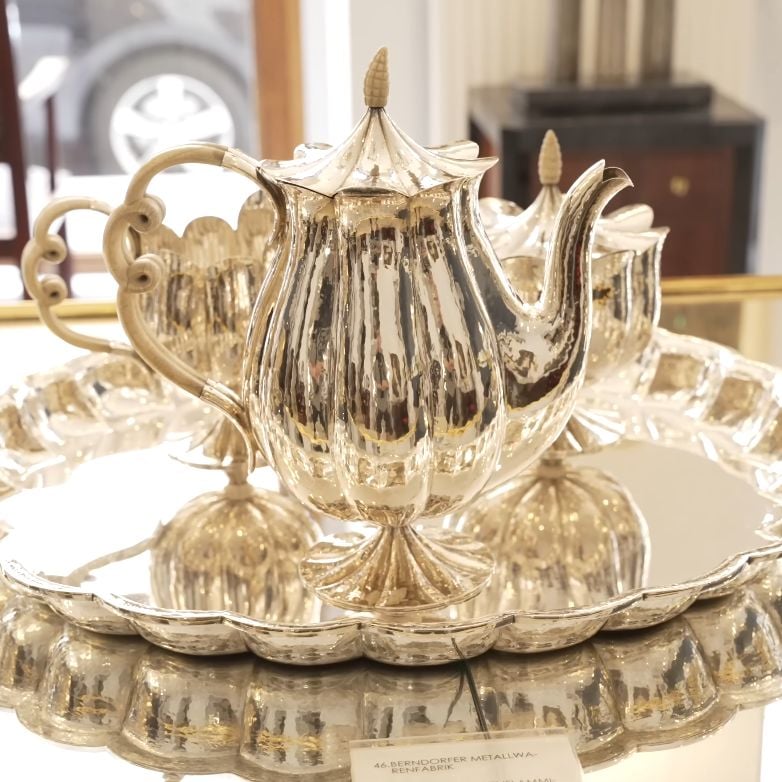
- a silver-plated teapot, usually paired with matching silver-plated milk and sugar pieces
If your service includes both a teapot and a coffee pot, it helps to know how to tell them apart. A teapot is usually shorter, rounder, and squatter, while a coffee pot is taller and more tapered.
Why Loose-Leaf Tea Is Best
Proper tea is brewed with loose leaves, not gimmicky infusers or low-quality shortcuts. Loose leaves need room to circulate so they can infuse fully and produce a better cup.
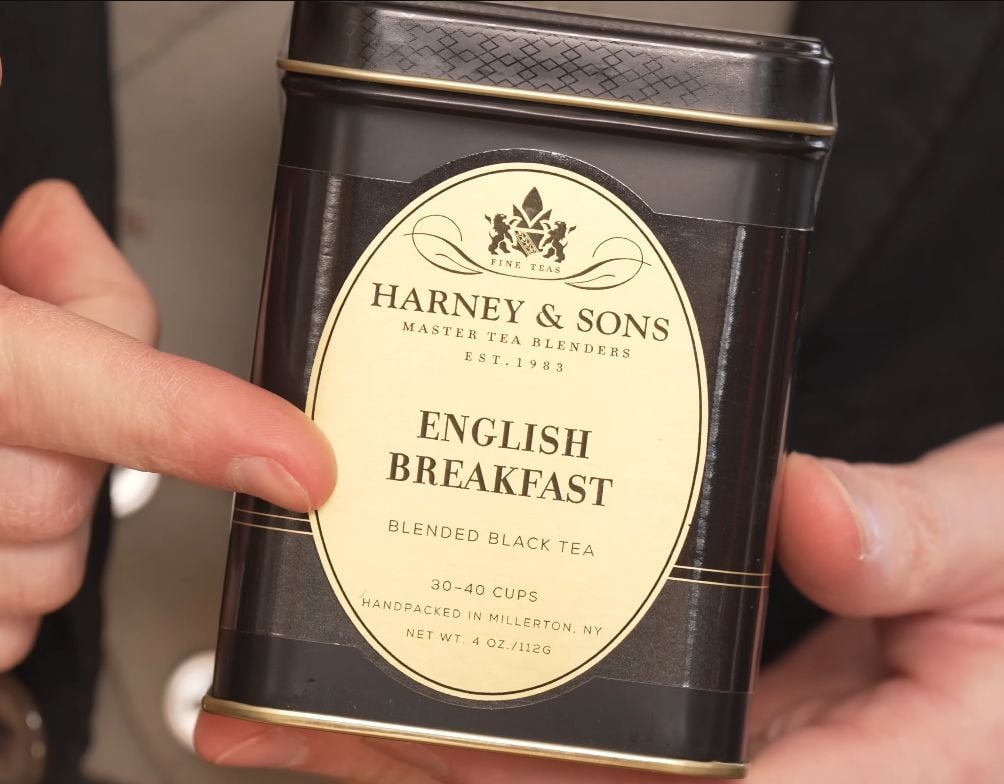
RECOMMENDED
English Breakfast Loose-Leaf Tea – Harney & Sons
A classic English Breakfast blend made from robust black tea leaves. Ideal for traditional tea service, it produces a full-bodied cup that pairs perfectly with milk and sugar.
That is why a tea strainer is one of the most important pieces in the entire service. It filters the leaves as the tea is poured into the cup, keeping the drink smooth without sacrificing the quality of a real infusion.
A stainless steel strainer is perfectly practical, while a silver-plated one makes a fine traditional upgrade or gift.
Learn How to Give Great Gifts
How to Brew Tea Properly
The brewing stage sets the tone for everything that follows. Good tea service begins with good tea, and that means getting the basics right.
1. Use the right water temperature
For a classic black tea such as English Breakfast, the water should reach a full boil, about 100°C / 212°F.
2. Use filtered water when possible
Hard water with high mineral content can flatten or weaken the flavor of tea. Filtered water generally produces a cleaner result.
3. Warm the teapot first
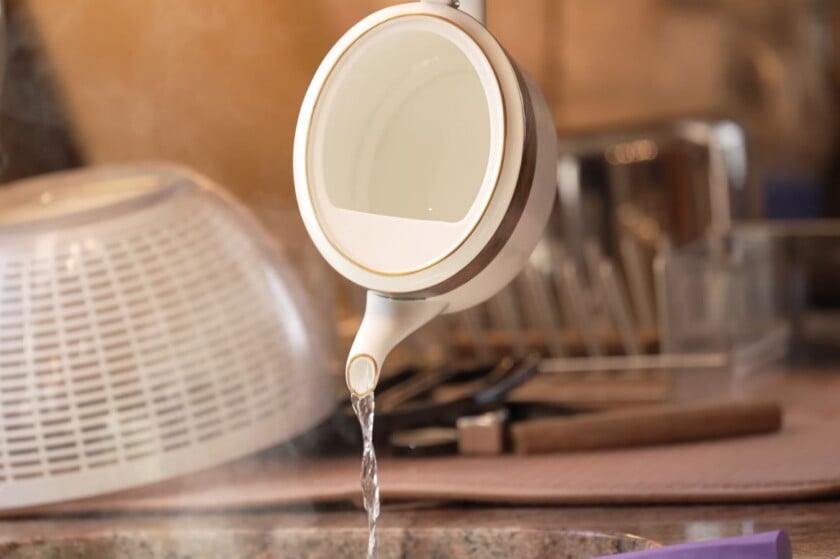
Before adding tea leaves, pour a little hot water into the teapot and replace the lid briefly. This gently warms the pot and helps maintain the brewing temperature.
4. Add the correct amount of tea
Use one portion of tea per person, plus one extra for the pot. A caddy spoon is traditional, but a heaped teaspoon works well.
5. Fill the pot correctly
Once the leaves are in, pour in freshly boiled water until the pot is about three-quarters to four-fifths full. Leaving a little extra space helps keep heat and steam circulating inside.
6. Steep patiently
Allow the tea to steep for three to five minutes, depending on how strong you want it.
“I say let the world go to hell, but I should always have my tea.”
Fyodor Dostoevsky, Notes from Underground

How to Prepare Milk, Sugar, and Lemon
While the tea is steeping, prepare whatever accompaniments will be offered with it.
Prepare the Milk and Sugar
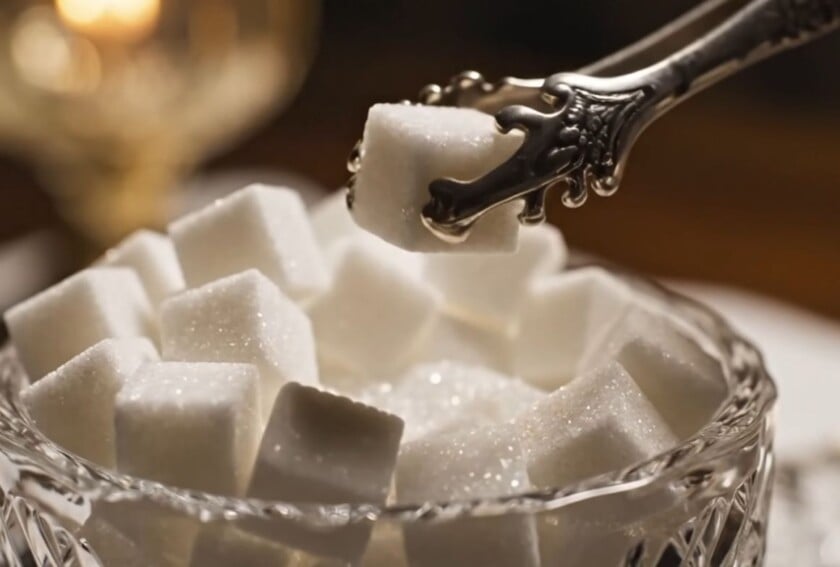
Milk should be poured into a spouted milk jug. Sugar belongs in a sugar bowl, served either as coarse white granulated sugar with a communal spoon or as white sugar cubes with sugar tongs.
Traditional tea service is fairly specific here.
- White sugar is for tea
- Brown sugar is for coffee
- Caster sugar belongs in baking, and
- Powdered sugar belongs on frosting
Serve Lemon Only When Appropriate
Lemon is sometimes served with lighter, more delicate teas rather than with a robust breakfast blend. If it is offered, the slices should be placed on a separate plate with a small fork.
10 Essentials for a Gentleman’s Home
How to Pour Tea for Guests
Once the tea has steeped, it is time to serve. This part should be deliberate and unhurried.
Pour slowly
Tea should never be rushed. Pouring too quickly risks spills and makes the service feel careless.
Always use the strainer
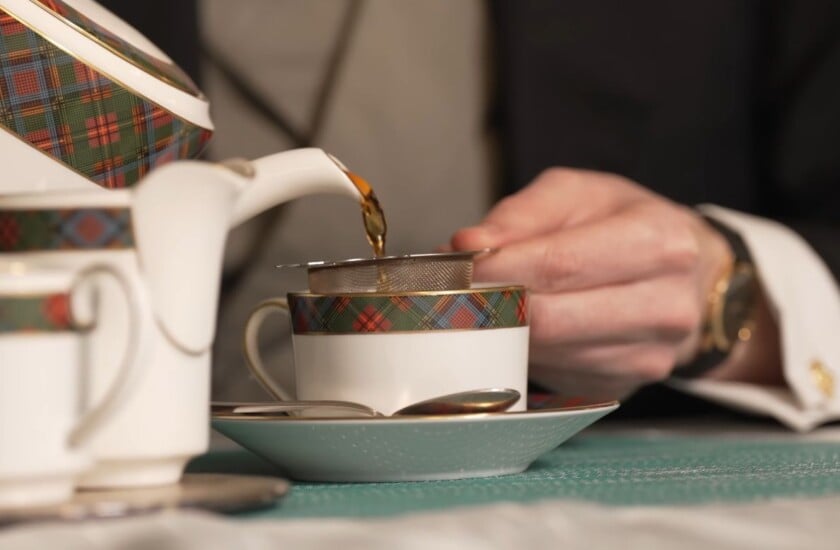
Hold the tea strainer close to the cup and pour the tea gently through it.
Do not overfill the cup
Fill each cup to about three-quarters full. This leaves room for milk or sugar and makes the cup easier to handle safely.
Serve others before yourself
The host should ensure everyone else is served first before pouring a personal cup.
Return the pot within easy reach
After the first round, place the teapot back on the table with the handle positioned conveniently for guests, since later servings are usually handled individually.
15 Habits of a True Gentleman
How to Add Milk and Sugar Correctly
Once the tea has been served, guests may add milk or sugar if they wish.
Add Milk After the Tea
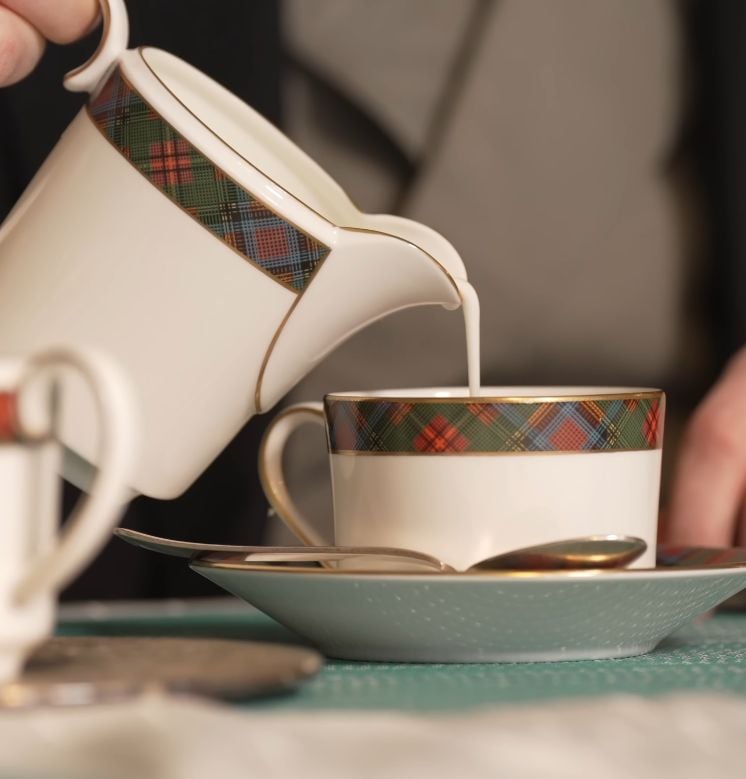
Milk is simply poured from the jug and then returned with consideration for the next person. There has long been debate over whether milk belongs in the cup before or after the tea, but in a group setting, adding milk afterward is the better choice.
It allows each person to judge the strength of the tea more accurately and adjust the cup to taste.
Use Sugar Carefully
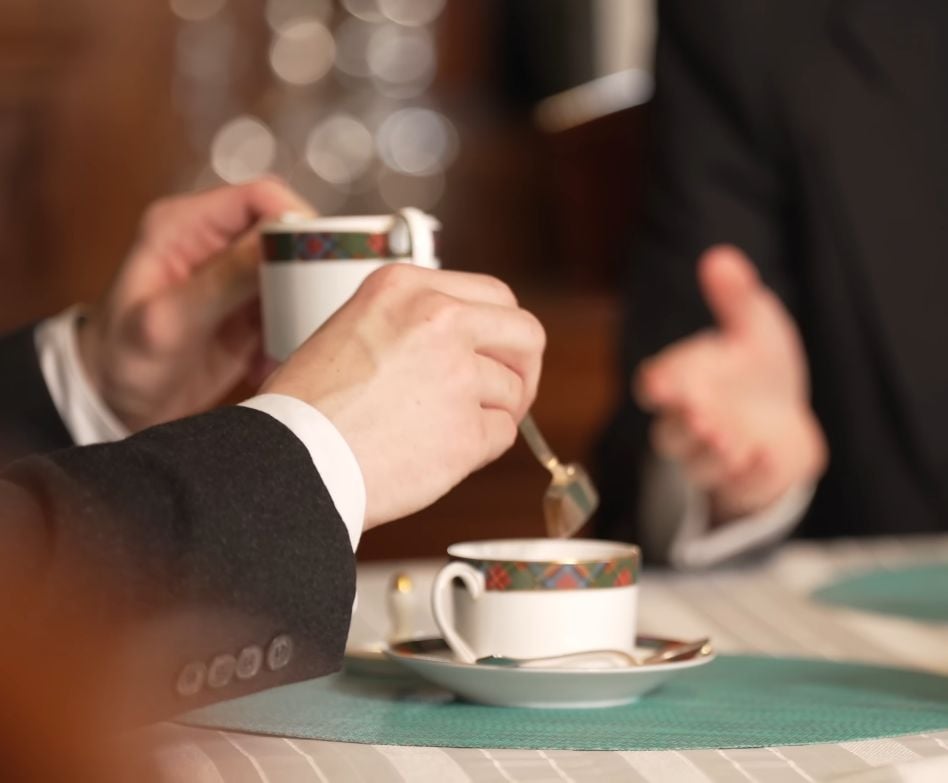
If granulated sugar is being used, it should be added with the communal sugar spoon, which is then returned directly to the bowl. That spoon should never touch the tea itself. A wet spoon placed back into the sugar bowl will cause the sugar to clump, which is unpleasant for everyone else.
If sugar cubes are offered, they should be added with the tongs as gently as possible. Dropping a cube carelessly into the tea is a quick way to splash the cup and table.
Stir Neatly
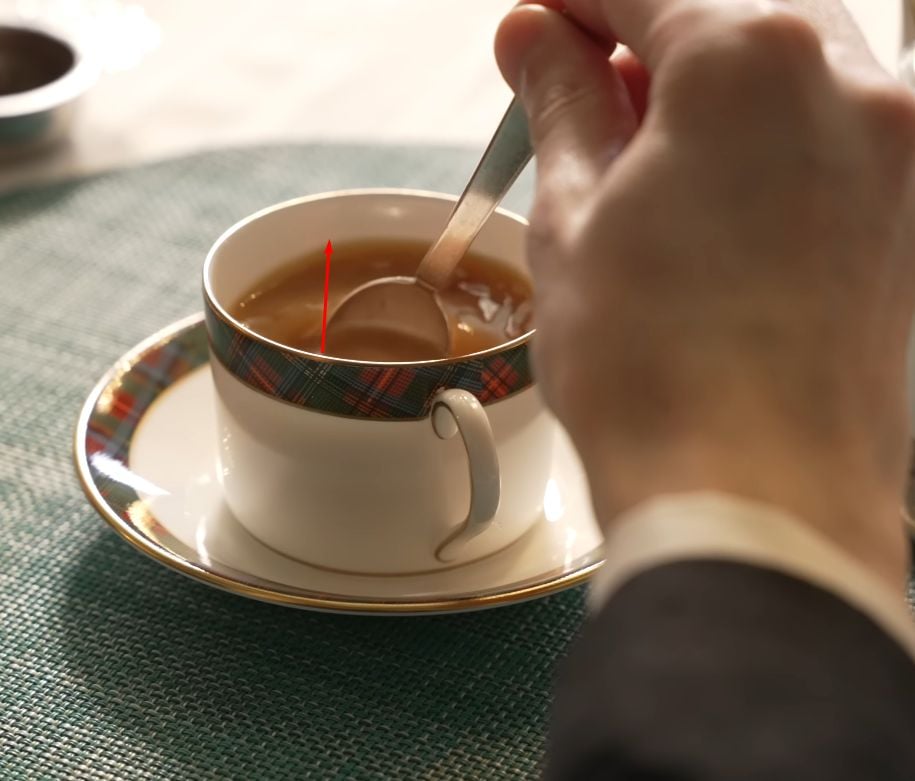
Once milk or sugar has been added, stir with the teaspoon from your saucer. The correct motion is back and forth from 12 to 6 o’clock, not an energetic circular swirl. It is neater, quieter, and more elegant.
How to Hold a Cup and Saucer Properly
Tea etiquette continues once the tea is in the cup.
Position the Cup Correctly on the Saucer
After serving, the cup should be returned to its place on the saucer with the handle positioned between 4 and 5 o’clock for a right-handed person. The teaspoon rests on the saucer parallel to the handle. Left-handed drinkers may simply mirror this arrangement.
Hold the Handle Properly
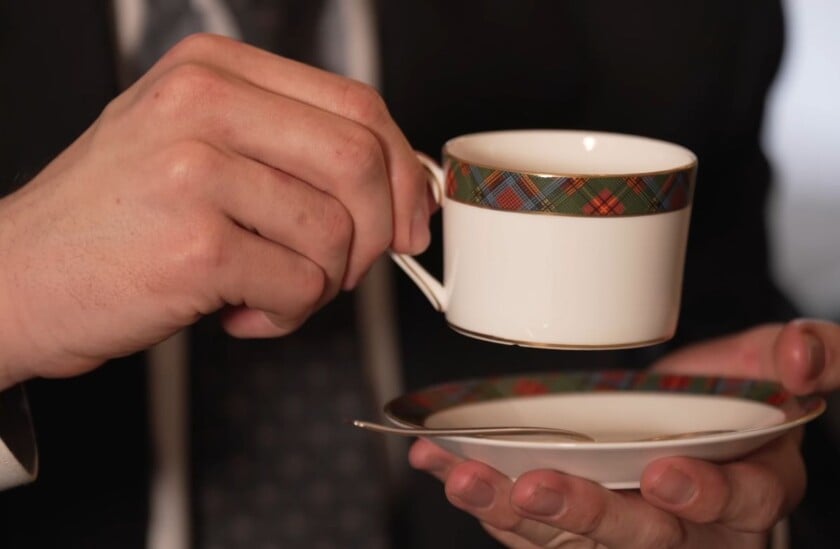
When lifting the cup, the handle should be pinched lightly between the thumb and forefinger rather than hooked through with the fingers. This is one of the clearest signs of polished tea manners.
❗The pinky finger should remain down.
Despite the stereotype, a raised pinky is not a mark of elegance. The remaining fingers should either be tucked neatly into the palm or used discreetly to steady the cup.
When drinking, the handle will usually settle naturally at 3 o’clock, or 9 o’clock for a left-handed drinker. Once the cup is returned to the saucer, it should go back to its original slight angle.
How to Properly Hold Your Drink
How to Drink Tea at a Table, Seated Away from a Table, or Standing
In every setting, the goal is the same: keep your movements controlled, your posture composed, and the cup and saucer handled with care.
If You Are Seated at a Table
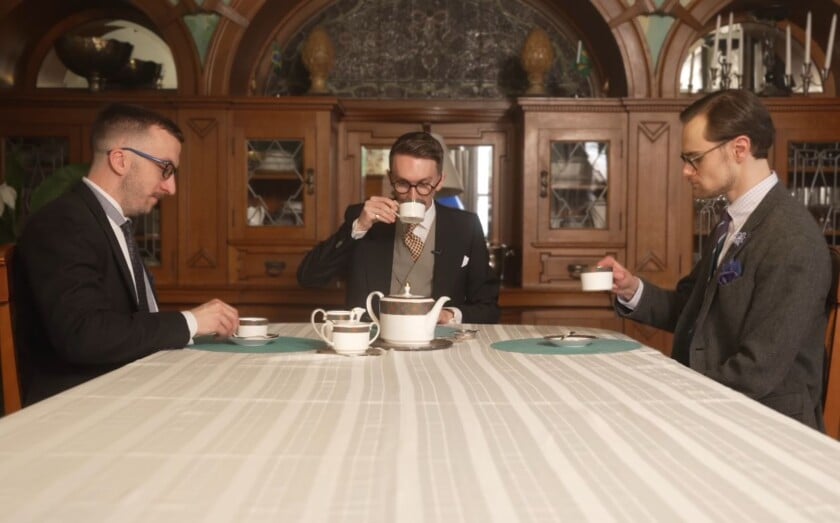
If you are seated at a table, the cup and saucer remain together on the table until you are ready to drink. Lift only the cup to your mouth, leaving the saucer and teaspoon where they are. After each sip, return the cup to the saucer.
If You Are Seated Without a Table
If you are seated without a table, the saucer should be held steady in the non-dominant hand, resting comfortably in the lap or just above it, while the dominant hand lifts only the cup.
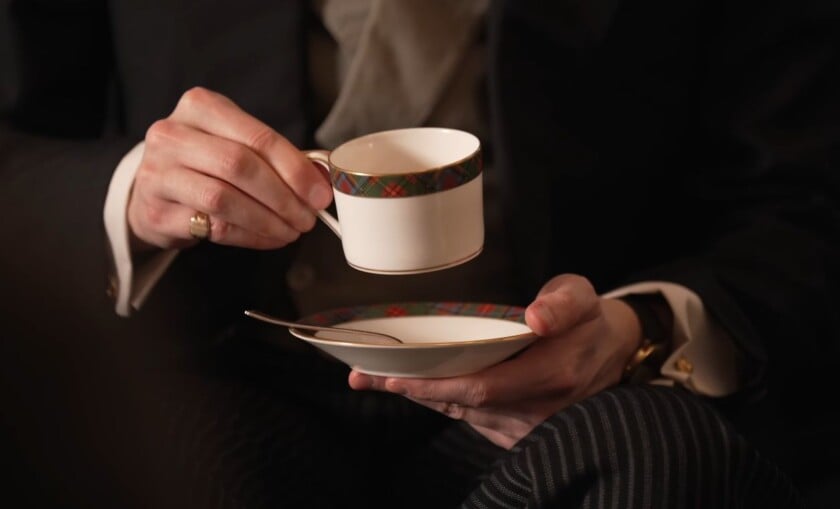
The same principle applies: the saucer stays in place, and the cup returns to it immediately after drinking.
If You Are Standing
If you are standing, the saucer is again held in the non-dominant hand, close to the body, usually around the natural waistline for stability. The cup is raised and returned without lifting the saucer toward the face.

In all cases, posture matters. Sit or stand upright, move with control, and keep the entire action composed.
Tea Etiquette Mistakes to Avoid
Much of tea etiquette comes down to avoiding the habits that make the experience feel sloppy or rushed.
- Do not overfill the cup. A teacup filled to the brim is difficult to handle gracefully and leaves no room for milk or sugar.
- Do not blow on the tea. If it is too hot, let it cool naturally rather than risking splashes.
- Do not slurp. Tea should be sipped quietly, not noisily.
- Do not look around the room over the rim of the cup. Lower your gaze into the bowl of the cup as you drink.
- Do not rush. Tea should be savored at an unhurried pace.
The Real Mark of a Gentleman at Tea
The true refinement of tea drinking is not just in the equipment, nor even in the gestures themselves. It lies in the tone you create around the occasion.
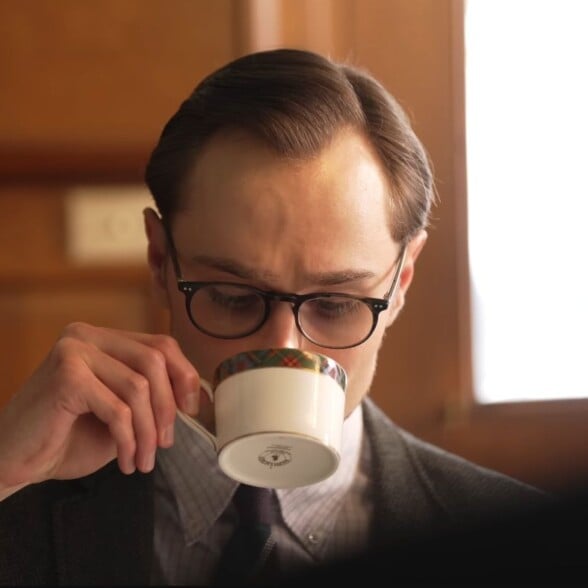
Tea Etiquette in Practice
Courtesy Is the Heart of the Ritual
A gentleman treats tea as more than a beverage. He serves carefully, listens as much as he speaks, and makes the people around him feel comfortable and considered. Good tea etiquette is ultimately an expression of courtesy.
That is what gives the ritual its lasting charm. The cup matters, the brewing matters, and the manners matter, but the real mark of a gentleman is the spirit in which the tea is shared.
Drinking Tea FAQs
What is the essence of drinking tea like a gentleman?
Drinking tea like a gentleman is about grace, attentiveness, and tradition. It’s as much about etiquette and appreciation as it is about the beverage itself. A gentleman approaches tea with respect for its history, careful preparation, and a keen awareness of manners.
Should I use loose leaf tea or tea bags?
This question depends on your circumstances and needs, but in general, if serving tea formally for others, loose leaf is usually preferred.
What is the proper way to serve tea?
Pour tea gently so as not to splash.
Offer milk and sugar separately, allowing each guest to tailor their cup.
Always offer guests the tea before serving yourself.
If I take milk and sugar, which goes in first?
Traditionally, milk is added first (“milk-in-first” or MIF) when using delicate china, as it protects the cup from cracking and cools the tea. Sugar, if desired, is added after the tea has been poured.
How should I hold the teacup?
Hold the cup by the handle using your thumb and first finger, with your middle finger tucked underneath for support. Do not hook your finger through the handle or extend your pinky. Bring the cup to your lips gently; never slurp.
May I stir my tea?
Stir quietly and gently. Move the spoon back and forth (not in circles), avoiding clinking against the cup. When finished, place the spoon on the saucer, never leave it in the cup.
Is it ever acceptable to dunk biscuits or food in tea?
In refined company, dunking is considered poor manners. Enjoy accompaniments like scones, biscuits, or sandwiches separately.
How should one address accidental spills or mishaps?
If a spill occurs, address it discreetly and calmly. Apologize softly, use a napkin to tidy up, and avoid drawing attention.
Must I always keep my pinky raised?
No. Raising the pinky is a misconception and is actually seen as a faux pas in traditional etiquette.




Leave a Reply