Plenty of menswear content loves to talk up penny loafers; they’re a staple of Americana, after all. This most-preppy, “most American” of shoes is American in part, but also a whole lot more.
Picture an Ivy League campus in 1955: chinos, blazers, a surprising lack of socks, and coins glinting in the saddle straps of loafers. Now take those shoes off those feet and put them on a wet dock on the western coast of Norway, forty-five years earlier.
That’s where they came from. Not frat houses, but fjords.
The Norwegian Fishing Village Where the Penny Loafer Began
The Footwear Problem on Norway’s Cold, Wet Docks
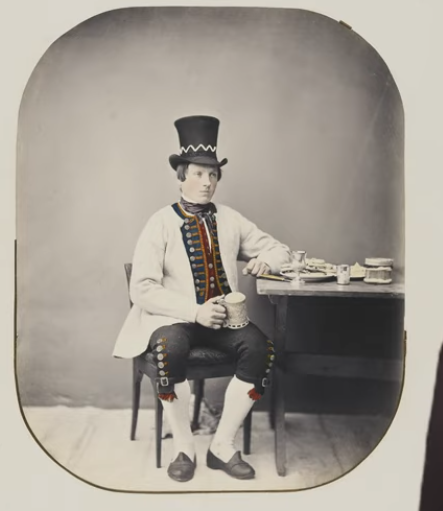
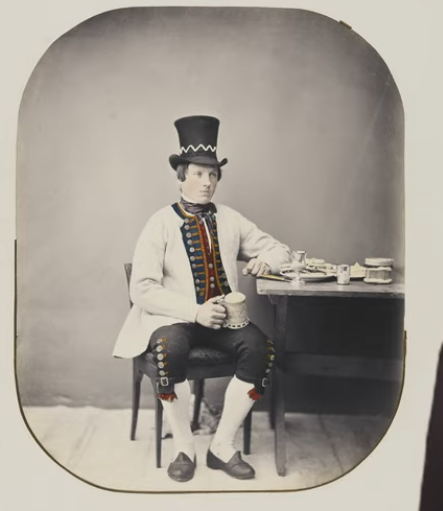
In the early 1900s, life on the Norwegian coast was wet, cold, and built around boats. The fishermen who manned them, constantly moving from boat to dock and back again, dealt with very specific footwear problems.
Laces froze, wet leather and knots were a recipe for disaster, and when the fishermen’s fingers grew numb from the cold, the last thing they wanted was to be fighting with their shoes just to get inside.
BEFORE THE LOAFER
The Local Shoe That Started It All
The people of Aurland — a municipality on Norway’s Sognefjord — had been solving this problem for generations by wearing simple slip-on shoes known as “Tese” or “Teses”: hand-sewn, made from flexible leather that molded to the foot, easy to take off at the door, with a sole-and-upper construction that moved with you rather than against you.
Nils Tveranger and the First “Aurland Shoe”
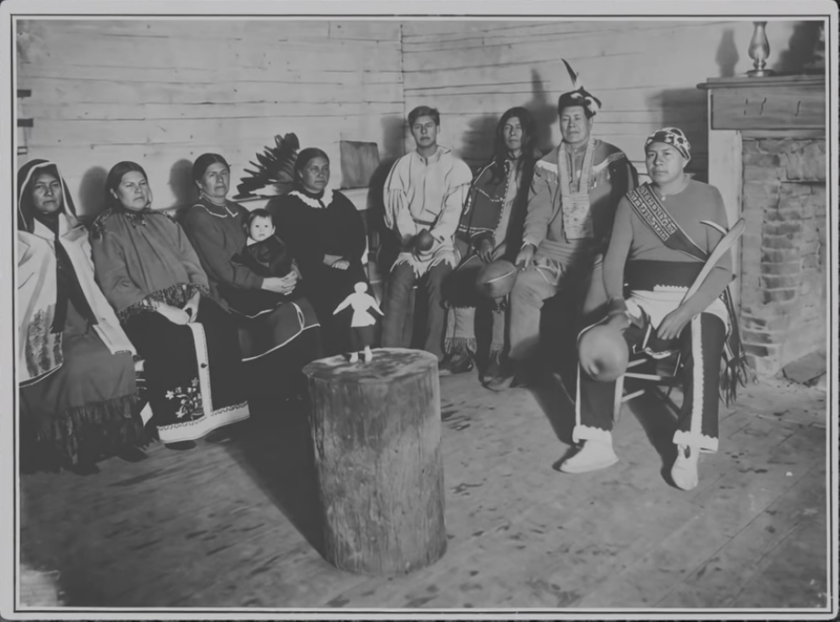
The design would be refined further by Nils Gregoriusson Tveranger (1874–1953), who traveled to the US at around age 13 to apprentice as a shoemaker. He saw remarkable similarities between the moccasins worn by the Iroquois people and the Tese shoes he knew at home — and began to imagine a new style of shoe melding the features of these slip-ons.
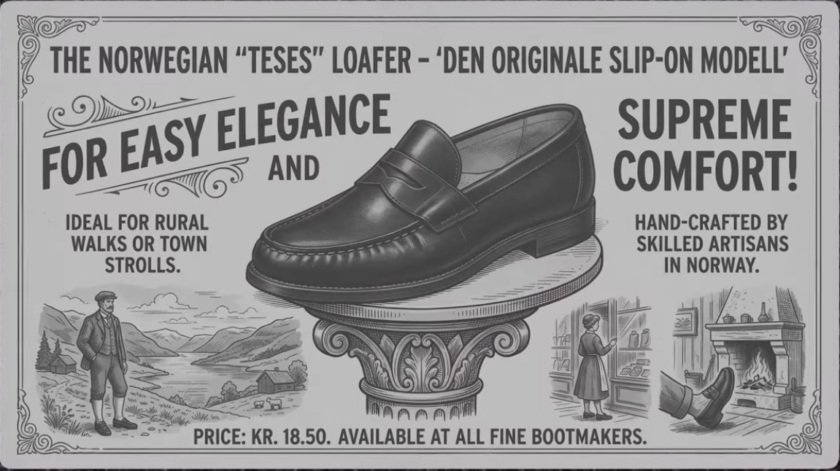
Having learned his shoemaking skills, Tveranger moved back to Norway in about 1894, at the age of twenty, and established himself in Aurland. His first version arrived in 1908 — and it still had laces and eyelets, to accomplish a closer fit than the Iroquois moccasins could achieve. Sold under the brand name “National,” it looked closer to a brogue than to anything you’d recognize today. It earned him a diploma at the national exhibition in Bergen in 1910, but it wasn’t the shoe that would conquer America.
That came roughly two decades later. Around 1930, Tveranger introduced a redesign he called the “Aurland moccasin” — later renamed the Aurland shoe — and this is where the slip-on finally lost its laces. Perhaps the most iconic addition was a leather strap, or “saddle,” across the vamp (that is, the top of the foot), with a small diamond-shaped cutout in the center. This saddle was purely decorative. But it did give the shoe a more refined and finished look.
Even then, the design remained local for years. And it might have stayed that way forever if not for the arrival of a revolutionizing force in global commerce: Brits and Americans with suitcases.
How the Loafer Crossed the Atlantic to America
In the years between the World Wars, British sportsmen traveled to Norway as a fishing destination, where these distinctive loafers caught their eye. Packing them into return luggage, these sportsmen (followed by others in their circles) began to wear the shoes at European resorts. Soon, two London shops began to stock them — but their popularity wouldn’t quite explode yet.
G.H. Bass Reinvents It as the “Weejun”
Meanwhile, G.H. Bass & Co., a Maine footwear manufacturer that had been making tall, laced moccasin work boots since 1906, came across the Aurland design sometime in the mid-1930s. The accounts differ on exactly how — some say a Bass representative went to Norway directly, others credit a middleman with samples, and one well-documented version has an Esquire staffer spotting the shoe in Palm Beach and the magazine’s editor hunting down an American maker.
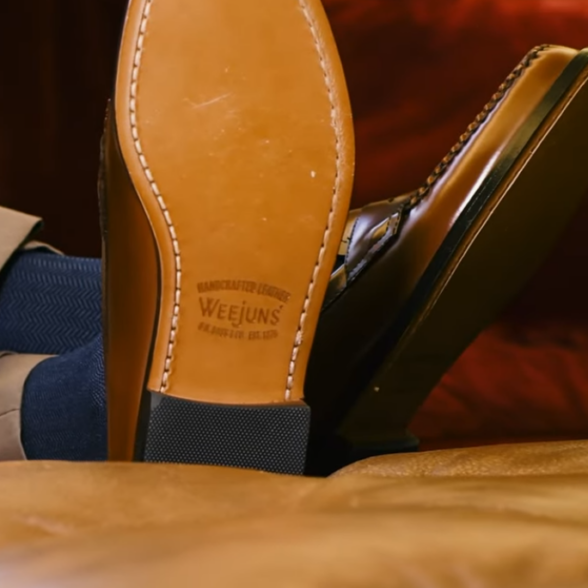
Either way, by 1936 Bass had produced their own version. They kept the moccasin toe and the strap with the cutout, but they Americanized everything else: tighter toe, dressier leather finish, sleeker overall profile.
SELLING A SHOE NOBODY COULD PRONOUNCE
The Renaming That Made It Stick
It needed a name. “Aurland” didn’t exactly roll off American tongues. But somebody still wanted to nod to the shoe’s country of origin, and “Norwegian” got shortened down to “Weejun.” Clever branding, because it signals heritage without quite explaining it.
Just as British sport-fishers brought the loafer style to local resorts, so too did their American counterparts bring the shoes to Palm Beach — and Bass was able to capitalize on this new stateside popularity at just the right moment. Then, following WWII, the tourist trade grew in Aurland, and visitors from the US and Britain (plenty more than just accomplished anglers) were tucking these shoes into their luggage and taking them home as curiosities.
From 1936 through the ’40s, Bass sold their Weejuns in campus stores up and down the East Coast, positioning the shoes as leisure footwear for the country-club set — relaxed but deliberate, the kind of thing you’d wear when you didn’t want to look like you’d thought about it.
What Is Campus Style?
How the “Penny Loafer” Got Its Name
That slot in the strap, inherited directly from Tveranger’s design, sat there doing nothing in particular until the early 1950s, when students started slipping pennies into it. The story goes that they did this so they’d have change for the payphone — and accounts genuinely differ on whether that holds up, since a call cost more than two cents through most of that era and Bell System phones didn’t take pennies anyway. The likelier explanation is simpler: the flash of copper provided a cheeky complement to the leather, especially the burgundy or oxblood color that was all the rage.
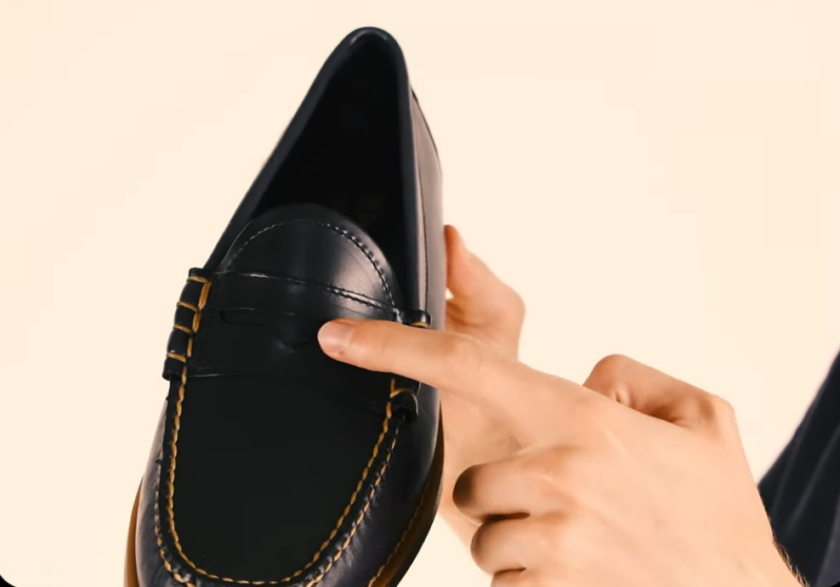
Whatever the real origin, the name “penny loafer” stuck in a way that “Weejun” alone never could. “Weejun” was a model name. “Penny loafer” was a category. By the mid-1950s, those two words meant something very specific: East Coast, studied-casual, the kind of person who signals taste through restraint rather than volume.
A fisherman’s work shoe had become everyday wear for people who might never have seen a fish anywhere other than on a plate. But trends fade. So why did this one stick?
Are Pleated Pants Cool Again?
Why the Penny Loafer Has Lasted More Than a Century
The Moccasin Construction Behind the Comfort
In a word: construction. The moccasin-toe stitching — that seam running around the edge of the vamp — gives the shoe a flexibility that most dress footwear just doesn’t have.
Other dress shoes feature outer leather stretched over hidden, harder leather (or, especially these days, thermoplastic) pieces that provide shape and structure. Moccasin construction naturally provides that structure without the need for hard leather underneath, so the resulting shoes are softer.
When you’re wearing a penny loafer, it moves with you.
Weejun vs. Beefroll: The Two Classic Styles
When it comes to the look of a penny loafer, there are two main versions.
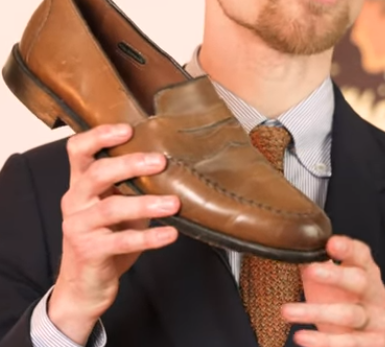
The original Weejun-style loafer has a sleek, relatively flat strap across the vamp.
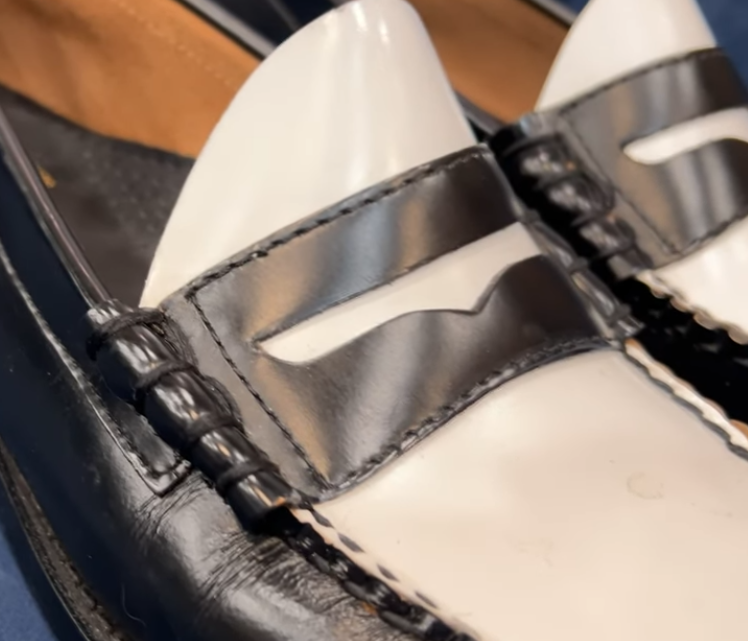
The so-called “beefroll” version, which Bass introduced around two decades after the original, is chunkier and more casual, due to the thick rolls of leather pinched along each side of the saddle, reminiscent of how a butcher would tie a roast.
For a deeper dive on both, see our full G.H. Bass “Weejuns” review.
Lined or Unlined — and How to Wear Them
Overall, the slip-on construction is the real functional advantage here. No laces means no fuss, and an unlined loafer worn sockless — or at least with no-show socks for the sockless look — is a particularly comfortable way to stay dressy in warm weather. Meanwhile, lined versions give you more structure and longevity if you’re wearing them year-round.
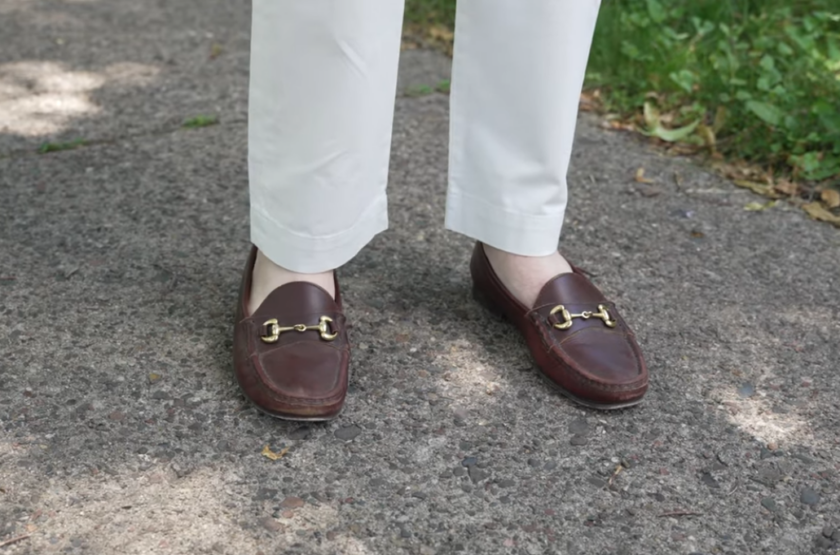
The shoe sits between an oxford and a sneaker on the formality spectrum: less rigid than lace-up dress shoes, so it reads relaxed; more refined than trainers, so it reads intentional. It works just as well with dark-wash denim and a clean T-shirt as it does with a sport coat and khakis.
The Loafer’s Place in the Modern Wardrobe
Today, the penny loafer exists at every point on the spectra of both price and taste. Gucci’s horsebit loafer turned the basic concept into a status symbol. Heritage brands like G.H. Bass still produce the Weejun in something close to its original form.
Rancourt, Alden, and a handful of American makers build elevated versions in shell cordovan and chromexcel that will outlast most things in your wardrobe. And on the casual end, you can find models from other sellers with chunky soles, contrast stitching, and unlined suede in a myriad of colors.
A Century On, Nothing Needed Changing
Every generation has decided the penny loafer is either the smartest shoe in the room or the one their father wore. It keeps coming back regardless.
Part of that is the look. Most of it is that the shoe was solved before anyone thought of it as fashion — a Norwegian shoemaker got the construction right for a man on a dock, and it happened to work just as well for a man on a campus, and then a man at a desk.
So they’ll go with almost anything you’d call smart-casual or business-casual. We’d leave the pennies out, though. That’s just our two cents.
Penny Loafer FAQ
Who invented the penny loafer?
The design traces to Nils Gregoriusson Tveranger (1874–1953), a shoemaker from Aurland, Norway, who blended the local “Tese” slip-on worn by fishermen with the moccasin construction he encountered while apprenticing in the United States. His first version appeared in 1908, though it still had laces; the laceless, saddle-strap “Aurland moccasin” that became the penny loafer arrived around 1930.
Why is it called a “Weejun”?
When the Maine footwear maker G.H. Bass produced its own version around 1936, it wanted to nod to the shoe’s Norwegian roots without a name that tripped up American shoppers — so it shortened “Norwegian” to “Weejun.”
Why do people put a penny in a penny loafer?
In the early 1950s, Ivy League students began slipping pennies into the diamond-shaped slot in the saddle. The popular “change for the payphone” explanation is disputed — a call cost more than two cents through most of that era, and the phones didn’t take pennies — so it was most likely just the flash of copper against oxblood leather.
What’s the difference between a Weejun and a “beefroll” loafer?
The original Weejun-style loafer has a sleek, relatively flat strap across the vamp. The beefroll version, which Bass introduced roughly two decades later, is chunkier, with thick rolls of leather pinched at each end of the saddle. Our G.H. Bass “Weejuns” review breaks down both.
Are penny loafers formal or casual?
They sit between an oxford and a sneaker on the formality spectrum — dressy enough for business-casual settings, relaxed enough for the weekend. That versatility is a big part of why they’ve lasted.
What to Watch Next
The Ultimate Loafer Shoes Guide For Men
We Spent THOUSANDS to Find the BEST Loafer at ANY Price Point

The Ivy Style Primer

Leave a Reply